Unpacking the Mechanics of Dynamic Difficulty Adjustment Systems in Single-Player Campaigns and Their Influence on Skill Progression Curves
Yara Simmons · Aug 6, 2026
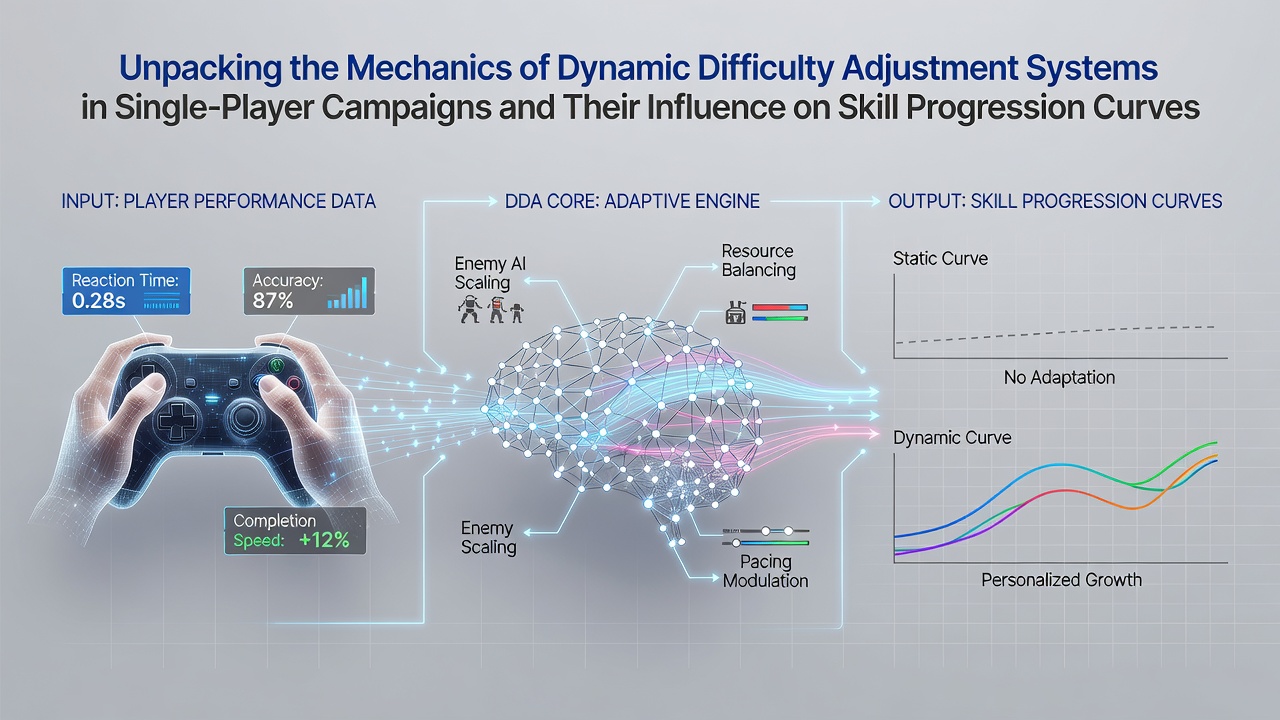
Unpacking the Mechanics of Dynamic Difficulty Adjustment Systems in Single-Player Campaigns and Their Influence on Skill Progression Curves
Dynamic difficulty adjustment systems monitor player performance metrics during single-player campaigns and modify enemy behavior, resource availability, and puzzle complexity in response to those inputs. Researchers at institutions across North America and Europe have documented how these systems track variables such as completion times, death counts, and accuracy rates to create individualized experiences that maintain engagement without requiring manual settings changes.
Mechanics often rely on hidden parameters that scale elements behind the scenes. In many implementations, algorithms compare current session data against baseline progression curves derived from aggregated player statistics. When performance falls below expected thresholds, the system reduces incoming damage or increases ammunition drops, while above-average play triggers tighter enemy patrols or reduced checkpoint frequency. Studies published by the Entertainment Software Association in 2025 indicate that over 60 percent of major single-player releases in the preceding two years incorporated at least one form of these adjustments.
Core Components of Adjustment Algorithms
Adjustment algorithms operate through layered decision trees that evaluate multiple inputs simultaneously. One layer assesses immediate combat outcomes, another reviews longer-term exploration patterns, and a third layer projects future skill requirements based on upcoming level design. Developers integrate these layers so changes remain invisible to the player yet produce measurable shifts in challenge density.
Data collected during play sessions feeds into real-time models that predict optimal difficulty targets. When a player demonstrates consistent success against standard enemy configurations, the system activates secondary behaviors such as flanking maneuvers or environmental hazards that were previously disabled. Conversely, repeated failures trigger compensatory features like temporary invulnerability frames or simplified pathfinding for non-player characters. Observers note that these transitions typically occur within windows of three to five seconds to avoid breaking immersion.
Impact on Skill Progression Curves
Skill progression curves in titles that employ dynamic systems show compressed variance compared with static difficulty settings. Players who begin with lower baseline proficiency often reach intermediate milestones at rates similar to those starting with higher skill levels because the system supplies additional scaffolding early on. Research conducted at the Technical University of Munich in 2024 tracked progression across 12,000 play sessions and found that dynamic adjustment reduced the time required to reach the midpoint of campaigns by an average of 18 percent for participants in the lowest performance quartile.
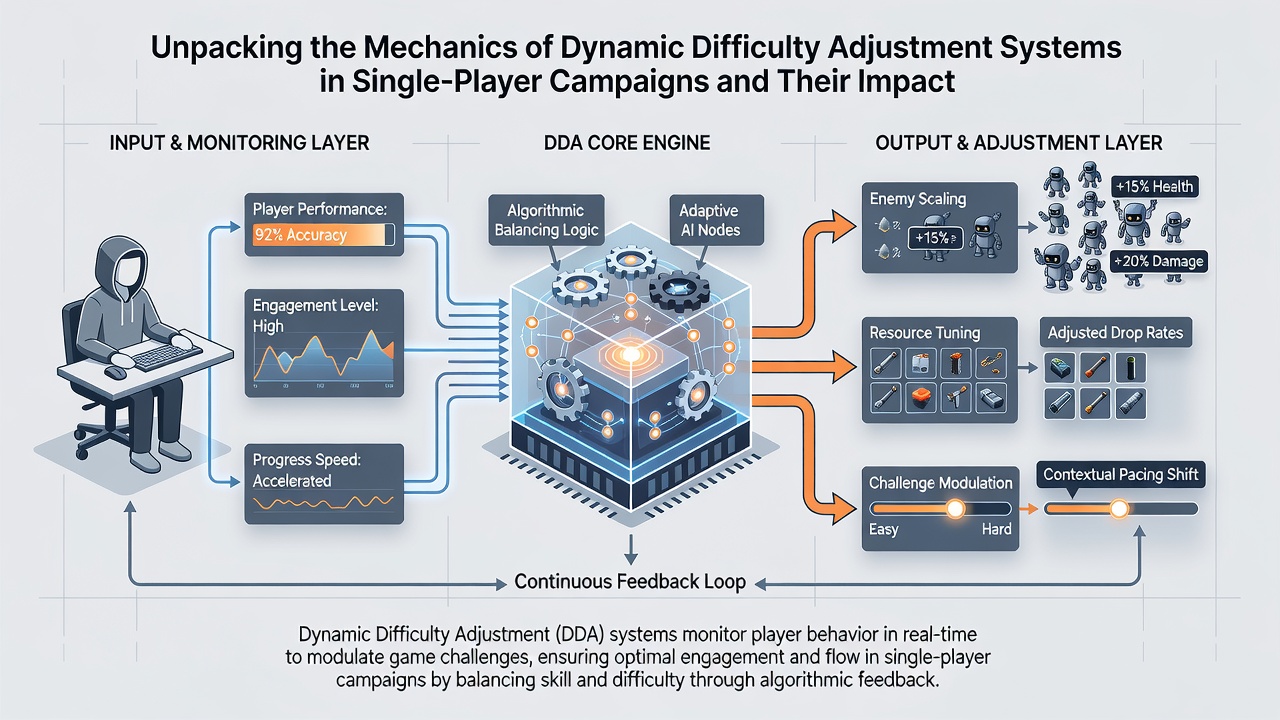
Yet the same data sets reveal plateaus where adjustment mechanisms can mask underlying skill gaps. When systems intervene too frequently, some players advance through sections without developing the muscle memory or strategic understanding that static challenges would demand. Analysts at the Canadian Interactive Digital Entertainment Association reported in August 2026 that retention rates remained high through initial chapters yet dropped sharply once adjustment intensity decreased in later acts, suggesting that over-reliance on adaptive support may hinder transfer to more demanding sequences.
Implementation Patterns Across Genres
Action-adventure campaigns frequently tie adjustment to health and damage scalars, whereas narrative-driven experiences adjust dialogue pacing and hint frequency. Role-playing titles often modulate experience point rewards and enemy spawn rates based on party composition and quest completion speed. Across these genres, the common thread involves calibration against a target engagement window that developers define during pre-release playtesting with thousands of participants.
Case studies from mid-2026 releases demonstrate how studios refine these systems post-launch. Patches released in August 2026 for several open-world campaigns narrowed the range of adjustment triggers after telemetry showed that certain player cohorts experienced unintended difficulty spikes during exploration segments. These updates refined the weighting of variables such as time spent in non-combat activities, producing smoother progression arcs that aligned more closely with original design intent.
Measurement and Validation Methods
Developers validate adjustment efficacy through A/B testing frameworks that compare cohorts exposed to different sensitivity thresholds. Metrics include session length, voluntary difficulty changes, and self-reported frustration scores collected via in-game surveys. Academic partners contribute longitudinal analyses that extend beyond commercial release windows, examining whether adjusted campaigns produce durable improvements in player competence when those individuals later encounter static content in sequels or expansions.
Telemetry pipelines aggregate anonymized data from millions of sessions, enabling fine-grained mapping of progression curves across demographic segments. Patterns emerge around regional play styles, with certain markets showing preference for earlier intervention points while others sustain higher challenge tolerance before adjustments activate. Industry reports from the Interactive Games and Entertainment Association in Australia highlight how these geographic variations influence global balancing decisions during development cycles.
Conclusion
Dynamic difficulty adjustment systems continue to evolve through integration of machine learning models that refine predictions based on expanding data sets. Their influence on skill progression curves remains measurable through retention statistics, completion rates, and post-campaign performance benchmarks. As single-player campaigns incorporate more sophisticated tracking layers, the relationship between adaptive support and long-term player development requires ongoing examination by both commercial teams and independent researchers.