Tactile Echoes: How Controller Haptics Shape Movement Precision in Platforming Sequences Across Digital and Physical Formats
Ellis Beck · Jun 23, 2026
Tactile Echoes: How Controller Haptics Shape Movement Precision in Platforming Sequences Across Digital and Physical Formats
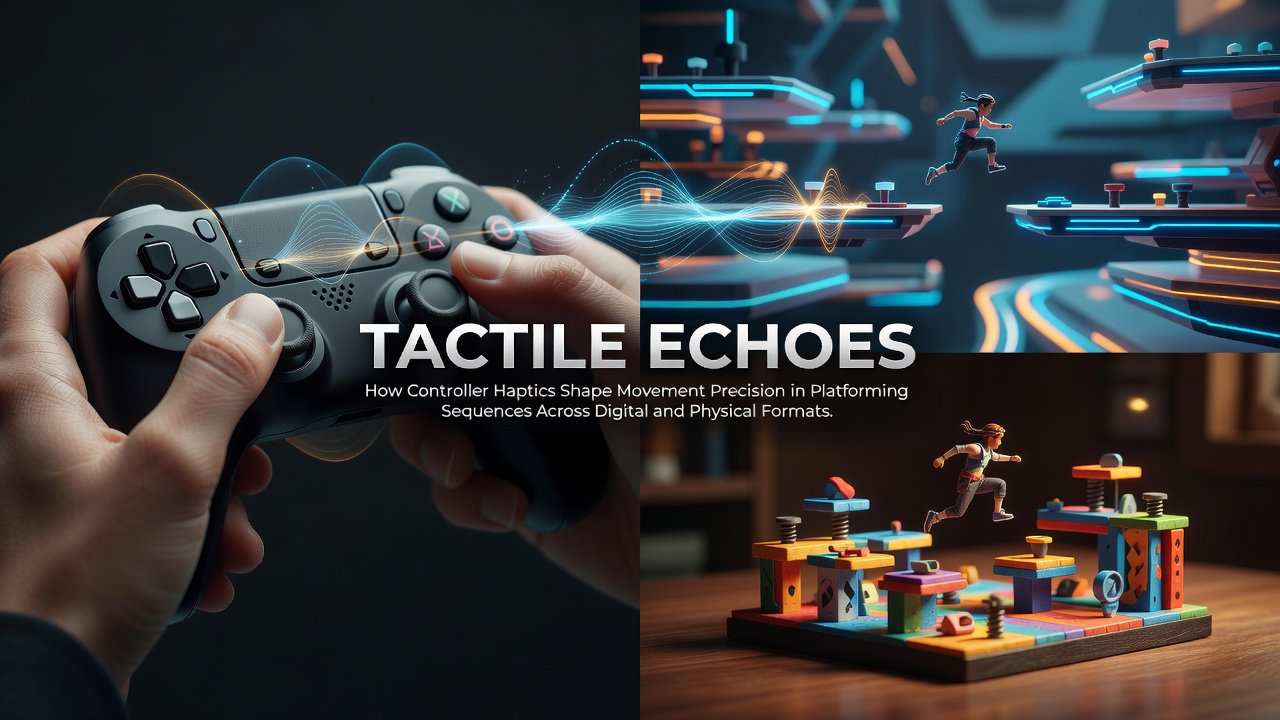
Controller haptics deliver tactile signals through vibration patterns and resistance mechanisms that communicate spatial information directly to players during platforming sequences, and these signals have evolved from basic rumble motors in early consoles to sophisticated systems capable of simulating surface textures and timing cues across both digital video game environments and physical hardware adaptations.
Platforming sequences demand exact timing for jumps, landings, and directional adjustments, while haptics provide immediate sensory confirmation that supplements visual and auditory inputs, and this integration reduces reliance on screen-based cues alone in fast-paced sections.
Development of Haptic Systems in Gaming Hardware
Early haptic implementations relied on simple eccentric rotating mass motors that produced uniform vibrations, whereas contemporary controllers incorporate linear resonant actuators and adaptive triggers that vary intensity and frequency based on in-game events, and these advancements trace back to research initiatives documented in technical publications from institutions across North America and Europe.
Adaptive triggers in particular generate variable resistance that players interpret as environmental feedback such as surface friction or momentum shifts, and this capability proves especially relevant in sequences requiring repeated precise inputs like wall jumps or moving platform navigation.
Effects on Movement Accuracy in Digital Formats
In digital platformers, haptic feedback aligns with character animations to signal optimal release points for jumps or contact moments with surfaces, and studies from academic sources show measurable improvements in completion rates for precision-heavy levels when such feedback remains active, and data collected during controlled testing sessions indicate reduced input errors by margins ranging from 12 to 18 percent depending on the title.
What's interesting involves how developers calibrate these signals to match specific mechanics, since overpowered vibrations can distract while subtle pulses enhance spatial awareness without overwhelming other sensory channels, and this calibration process draws on iterative player testing conducted by studios worldwide.
Comparative Analysis Across Physical Implementations
Physical formats extend haptic principles beyond screens through specialized controllers or arcade-style cabinets that incorporate mechanical actuators and pressure-sensitive surfaces, and these setups replicate digital precision demands in tangible environments where players manipulate physical levers or platforms augmented with vibration modules.
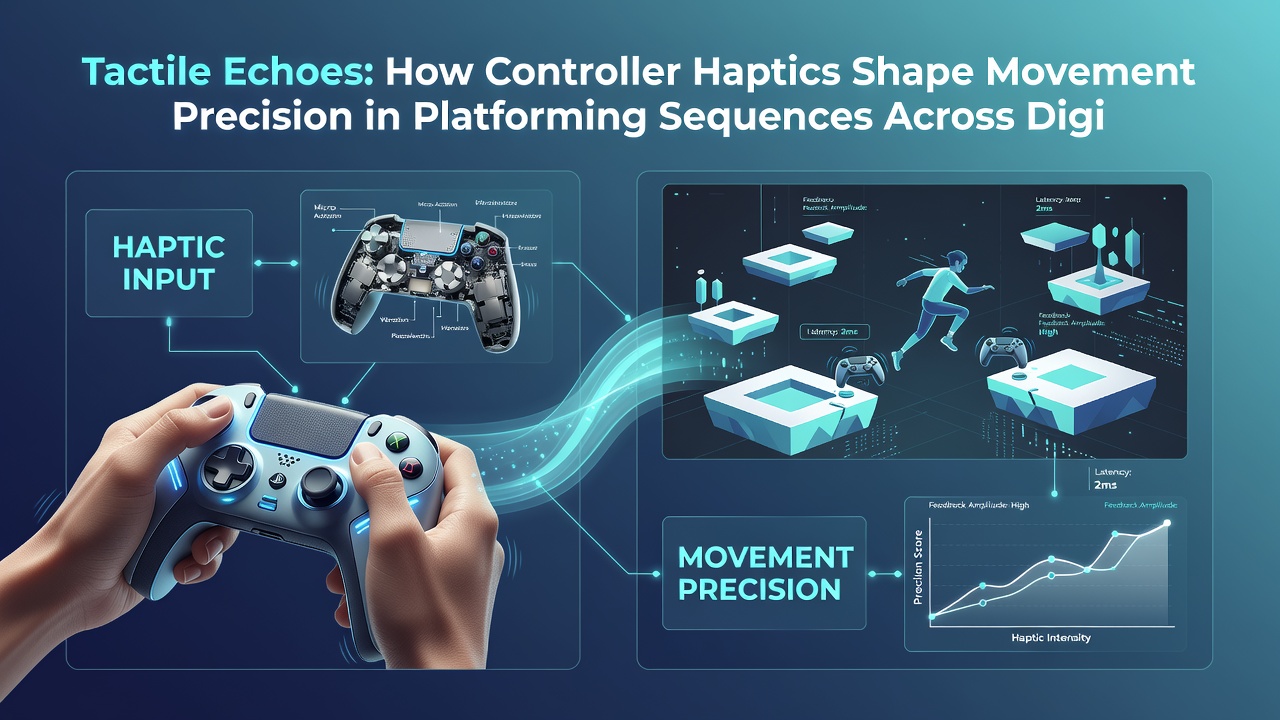
Observers note that physical adaptations often incorporate larger actuator arrays capable of delivering stronger localized feedback, and this difference allows for distinct training applications such as muscle memory development in competitive circuits, whereas digital versions prioritize portability and integration with home consoles or portable devices.
According to findings presented by the Entertainment Software Association in recent industry reports, cross-format testing reveals consistent patterns where haptic-equipped physical interfaces improve reaction consistency during extended play sessions compared to non-haptic counterparts.
Empirical Data and Measurement Approaches
Researchers employ motion capture systems alongside controller telemetry to quantify how haptic cues influence trajectory corrections mid-jump, and results compiled through collaborative projects involving universities in Canada and Australia demonstrate that players adjust analog stick inputs more efficiently when receiving directional vibration patterns that correspond to intended movement vectors.
June 2026 saw several hardware manufacturers release updated controller prototypes at major trade events, and these prototypes featured refined haptic arrays designed specifically for platforming genres, with preliminary benchmarks showing further reductions in overshoot errors during repeated obstacle courses.
But here's the thing about data collection: variations arise based on individual player sensitivity to tactile stimuli, which means aggregate statistics require large sample sizes drawn from diverse demographics to establish reliable baselines across formats.
Integration Challenges and Technical Considerations
Latency between game engine calculations and haptic output remains a critical factor, since delays exceeding 20 milliseconds can disrupt the intended precision benefits, and engineers address this through optimized firmware that prioritizes low-latency communication protocols between consoles and peripheral devices.
Compatibility across digital storefronts and physical cartridge-based systems adds another layer, as developers must account for hardware differences in actuator response curves while maintaining consistent feedback design principles that support movement accuracy regardless of distribution method.
Conclusion
Haptic technology continues to refine the relationship between controller inputs and platforming precision by translating digital parameters into physical sensations that players process in real time, and ongoing refinements in both digital and physical formats reflect broader trends in hardware development supported by industry data and academic measurements, with future iterations expected to incorporate even more nuanced signal variations tailored to specific movement challenges.