Shedding Light on Memory Leak Patterns During Extended Play Sessions and Their Repercussions for Hardware Longevity in High-End Gaming Rigs
Klara Wolf · Aug 8, 2026
Shedding Light on Memory Leak Patterns During Extended Play Sessions and Their Repercussions for Hardware Longevity in High-End Gaming Rigs
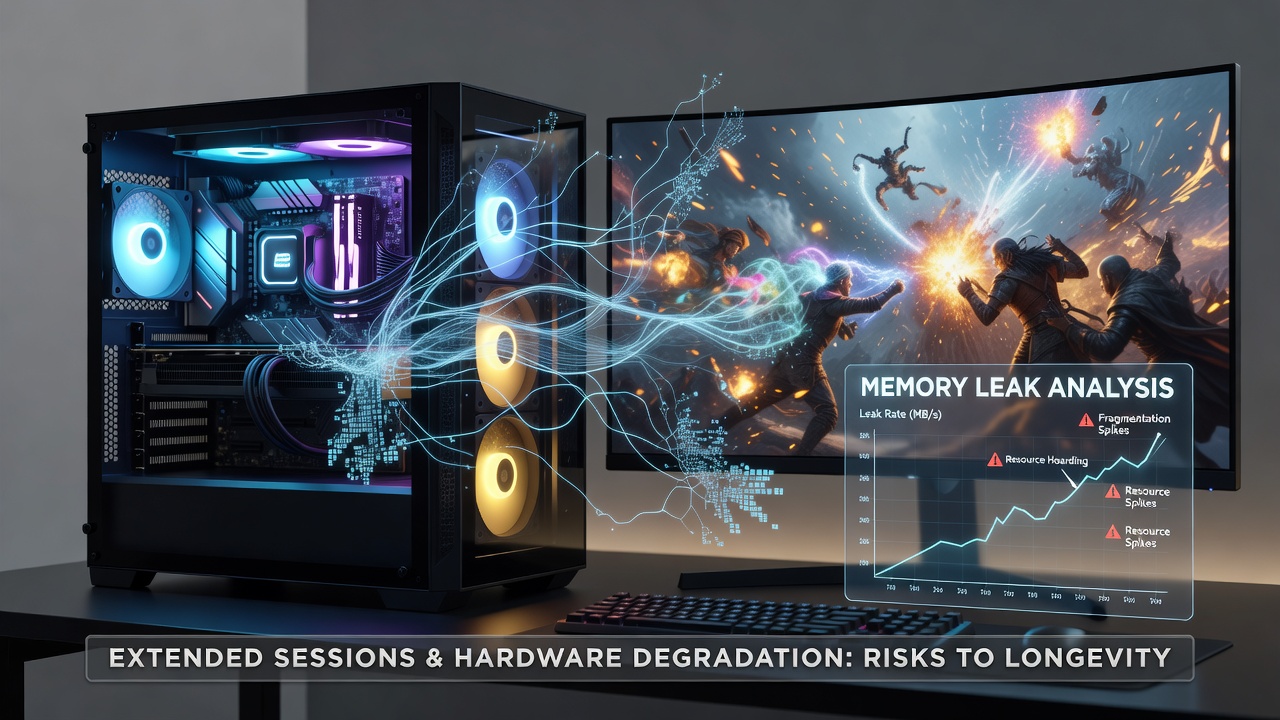
Memory leaks in video games occur when applications fail to release allocated RAM after it is no longer needed, and this pattern becomes especially noticeable during sessions that stretch beyond four or five hours on high-end PCs equipped with 32GB or more of system memory. Researchers who monitor system resources have documented how certain titles, particularly those built on complex engines with dynamic asset loading, gradually consume increasing amounts of RAM as play continues without corresponding deallocation.
Identifying Common Leak Patterns in Modern Titles
Observers note that leaks often cluster around specific subsystems such as particle effects, audio streaming buffers, and world-state tracking arrays. Data collected through performance profiling tools shows spikes in private bytes usage that correlate with transitions between large open-world zones or repeated spawning of non-player characters. In August 2026 several monitoring reports from community-driven hardware tracking projects indicated that games released in the prior twelve months exhibited measurable growth in memory footprint after the six-hour mark, with some titles adding between 200MB and 800MB per additional hour under sustained load.
Those who analyze telemetry logs frequently find that the leaks stem from circular references in scripting environments or from textures that remain pinned in memory despite being culled from the visible scene. Hardware vendors have observed that these gradual increases force the operating system to rely more heavily on virtual memory paging when physical RAM approaches capacity, which in turn raises disk I/O and CPU overhead on systems that already run multiple background processes.
Hardware Stress and Component Degradation Pathways
Elevated memory pressure translates into sustained high utilization of the memory controller and associated voltage regulators on the motherboard. Studies conducted by semiconductor reliability laboratories demonstrate that constant high-bandwidth access combined with elevated temperatures accelerates electromigration within integrated circuits, shortening the mean time between failures for both DRAM modules and the CPU's integrated memory controller. High-end rigs that incorporate liquid cooling loops still experience localized heating around voltage regulator modules when the system remains at 90 percent RAM occupancy for extended periods, because the memory subsystem itself generates additional thermal load.
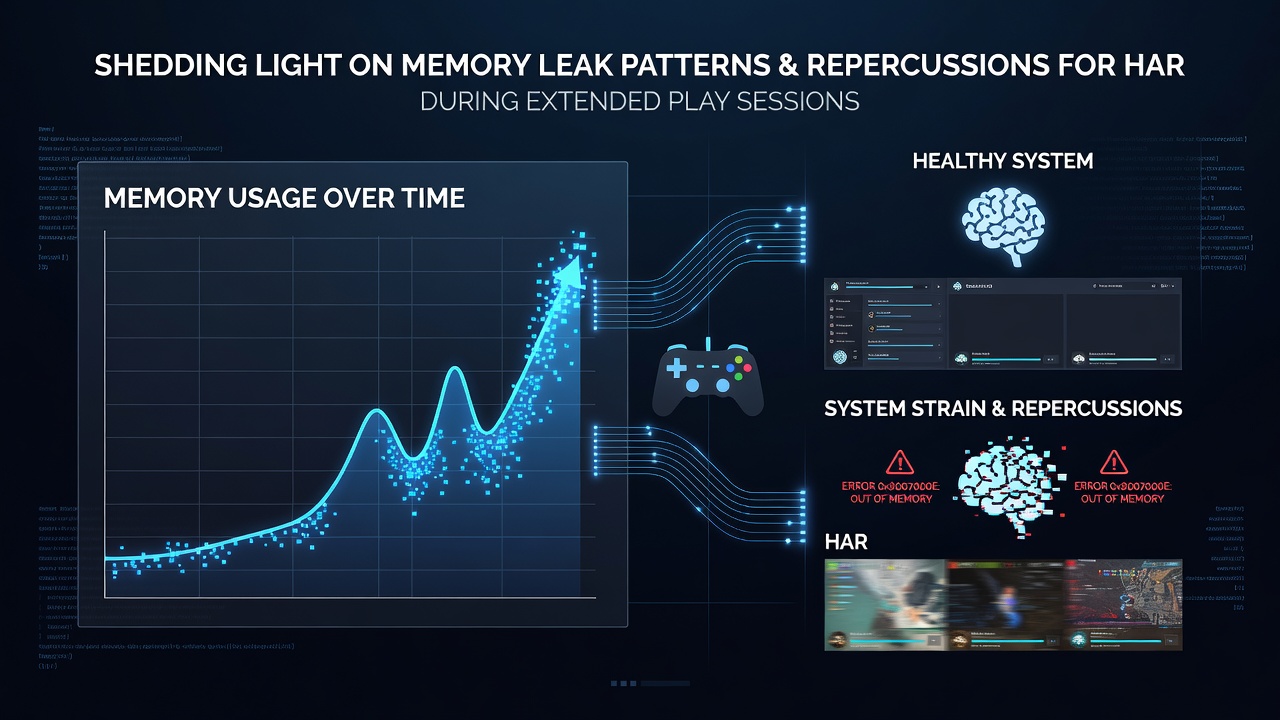
Thermal sensors embedded in flagship graphics cards and processors record higher average junction temperatures when memory leaks force the entire platform into a higher power state. According to figures released by the IEEE Reliability Society, each 10 °C rise in operating temperature roughly halves the expected lifespan of solid-state components, and memory leaks contribute to exactly this class of thermal elevation during marathon sessions. Users who track SMART data on SSDs have also reported increased wear-leveling activity as the operating system compensates for swapped pages, although the effect remains secondary to the primary impact on silicon longevity.
Measurement Approaches and Industry Responses
Developers increasingly incorporate runtime memory sanitizers and automated leak detection into their quality-assurance pipelines, yet the complexity of modern engines means some allocations still evade detection until players report stuttering after six or seven hours of continuous play. European research institutions collaborating on software sustainability metrics have published benchmarks that compare memory retention curves across different rendering APIs, revealing that certain Vulkan-based implementations retain fewer orphaned buffers than equivalent DirectX paths under identical workloads.
Platform holders now require extended-duration stress tests as part of certification for high-profile releases, and these protocols specifically measure RAM consumption at the eight-hour and twelve-hour marks. When leaks are identified, patches often target reference counting fixes or introduce explicit resource release calls during level transitions. Data from hardware monitoring services indicate that after such patches are applied, the rate of reported system instability during long sessions declines measurably within the first month of deployment.
Long-Term Implications for System Maintenance
Owners of high-end gaming systems who routinely engage in sessions longer than four hours benefit from periodic memory-pressure testing using diagnostic utilities that simulate extended gameplay. These tests help surface leaks before they manifest as frame-time spikes or unexpected shutdowns triggered by thermal protection circuits. Manufacturers have begun including memory-usage trend graphs in their companion software suites, allowing users to correlate in-game events with rising RAM occupancy without third-party tools.
Replacement cycles for premium components have historically been driven by performance gains, yet reliability data now show that consistent exposure to memory-induced stress can shift those cycles earlier for users who do not apply updates or monitor thermals. Industry associations tracking consumer electronics returns note a small but growing percentage of warranty claims attributed to memory-controller degradation rather than outright manufacturing defects, particularly among systems used for competitive or content-creation workloads that involve prolonged uptime.
Conclusion
Memory leak patterns during extended play sessions create measurable resource pressure that, over months and years, contributes to accelerated wear on critical hardware subsystems in high-end gaming rigs. Continued refinement of detection tools, combined with more rigorous certification requirements, has begun to reduce the frequency of severe leaks in newer titles. Players and system builders who track utilization metrics and apply timely updates therefore maintain better alignment between expected and actual component service life.