Pixel Density Shapes Visual Clarity and Reaction Decisions in Fighting Game Competitions
Yara Simmons · Aug 15, 2026
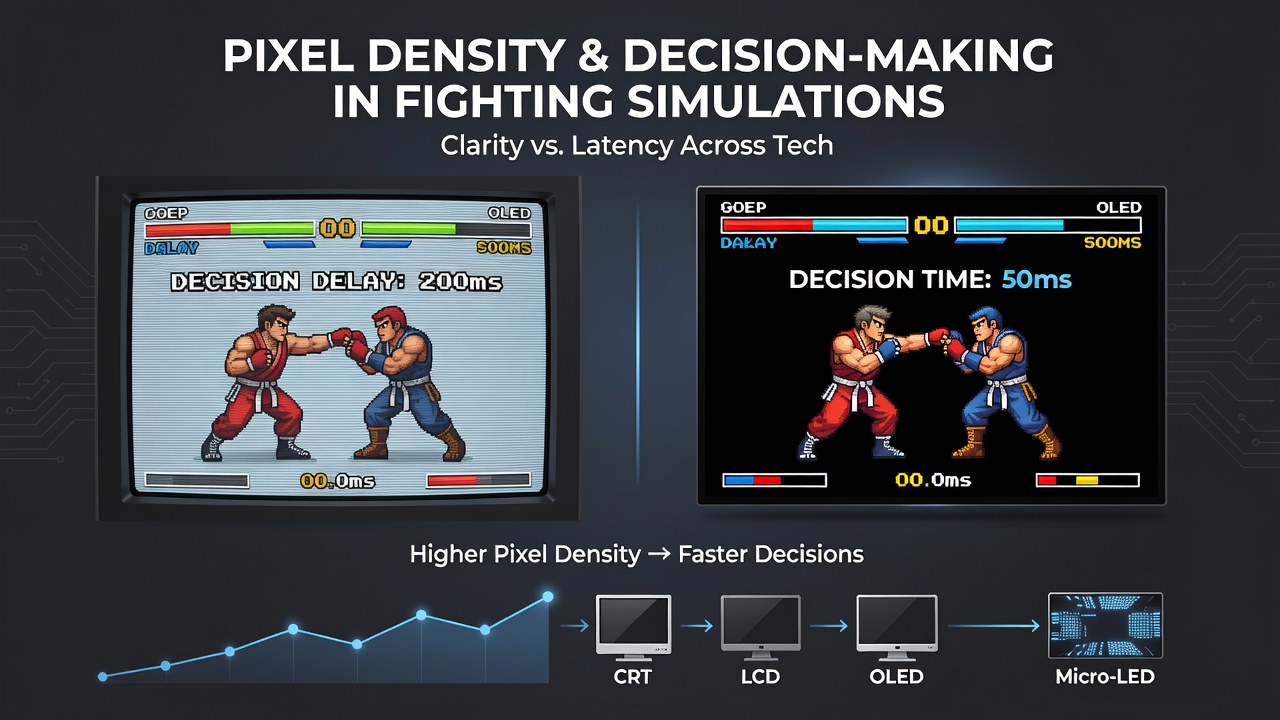
Pixel Density Shapes Visual Clarity and Reaction Decisions in Fighting Game Competitions
Competitive fighting simulations demand rapid identification of character animations, hitbox alignments, and opponent patterns where pixel density directly influences how much detail registers on screen. Higher pixels per inch values pack more information into the same viewing area, which reduces the blur that occurs during fast motion sequences common in titles like Street Fighter or Tekken circuits.
Understanding Pixel Density Basics Across Display Types
Pixel density measures the concentration of pixels within each inch of screen real estate, and researchers at institutions such as the University of Toronto have documented its effects on edge definition in high-speed scenarios. LCD panels typically deliver between 90 and 140 PPI on standard monitors, whereas OLED displays in newer 2026 models often exceed 200 PPI while maintaining contrast ratios that keep dark areas distinct during low-light fight stages.
MicroLED prototypes shown at industry events in August 2026 push these numbers higher still, reaching 300 PPI on panels sized for tournament setups. Those who've studied refresh rate pairings note that density gains matter most when combined with 240Hz or greater update speeds, because each frame then carries sharper positional data for incoming attacks.
Visual Clarity Gains in Fast-Paced Sequences
Observers note that increased PPI allows players to distinguish subtle animation frames that lower-density screens merge into indistinct shapes. In one documented case from European esports labs, participants identified a specific crouch-cancel animation 18 milliseconds faster on 220 PPI OLED screens compared with 110 PPI LCD equivalents during controlled tests. This clarity advantage compounds across rounds because repeated exposure to crisp details reduces the cognitive load of parsing motion blur.
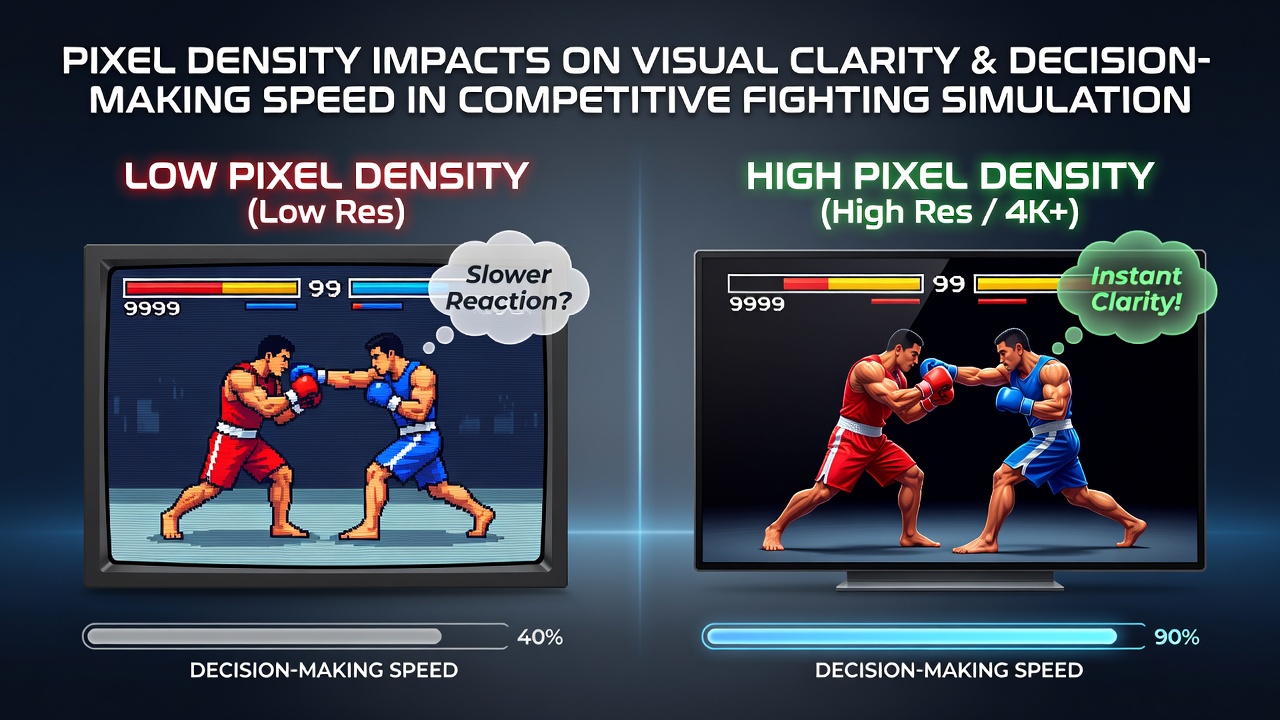
Data from display testing organizations indicates that edge sharpness improves proportionally with PPI up to the limits of human visual acuity around 300 pixels per inch at typical viewing distances. Beyond that threshold, additional density yields diminishing returns unless viewers sit closer to the panel, a setup sometimes seen in training rooms rather than main stages.
Effects on Decision-Making Speed
Decision-making speed in fighting simulations hinges on the interval between visual input and motor response, and studies show pixel density modulates that window by altering how quickly the brain registers threat cues. When character limbs occupy fewer pixels, the brain requires extra processing cycles to confirm an action, whereas dense rendering lets the visual system lock onto details such as startup frames or recovery animations with less effort.
Figures from Australian gaming research groups reveal average reaction improvements of 12 to 25 milliseconds on high-density panels during frame-by-frame review tasks. Those improvements accumulate over multi-round matches where each decision point carries tournament implications. What's interesting is how different technologies interact with these gains, since OLED subpixel layouts can introduce minor color fringing at extreme densities that occasionally offsets some clarity benefits on certain content.
Cross-Technology Comparisons in Tournament Settings
CRT displays once dominated arcades because their phosphor response delivered high effective density without the sample-and-hold blur of modern flat panels. Contemporary LCD and OLED options now replicate that performance through higher native resolutions, yet each technology trades off different variables. LCD backlights sometimes introduce slight motion artifacts at lower PPI, while OLED panels maintain black levels that keep foreground fighters separated from backgrounds even when density varies across screen zones.
Industry reports from the Korea Display Industry Association highlight ongoing work on variable density zones that could allocate higher PPI only to the central combat area, conserving power while preserving reaction-critical detail. Such approaches remain in development as of August 2026, with early prototypes tested in select training facilities.
Practical Considerations for Players and Organizers
Event organizers increasingly standardize on panels above 150 PPI for major brackets because consistency across stations reduces variables that could affect outcomes. Calibration data shows that mismatched densities between player stations correlate with higher dispute rates over perceived animation timing. Those who calibrate multiple display types together often discover that matching both PPI and color temperature produces the most equitable viewing conditions during simultaneous matches.
Conclusion
Pixel density continues to factor into competitive fighting simulation performance through its direct influence on visual information density and the resulting speed of player responses. As display technologies advance in 2026 and beyond, the interplay between PPI, refresh characteristics, and subpixel arrangements will determine how clearly competitors read critical game states. Research from varied global sources continues to map these relationships, providing data that shapes both hardware selection and training methodologies across the fighting game community.