Patterns in Shader Compilation Times Across Graphics Card Generations Shape Initial Experiences in Graphics-Heavy Games
Katja Keller · Jul 11, 2026
Patterns in Shader Compilation Times Across Graphics Card Generations Shape Initial Experiences in Graphics-Heavy Games
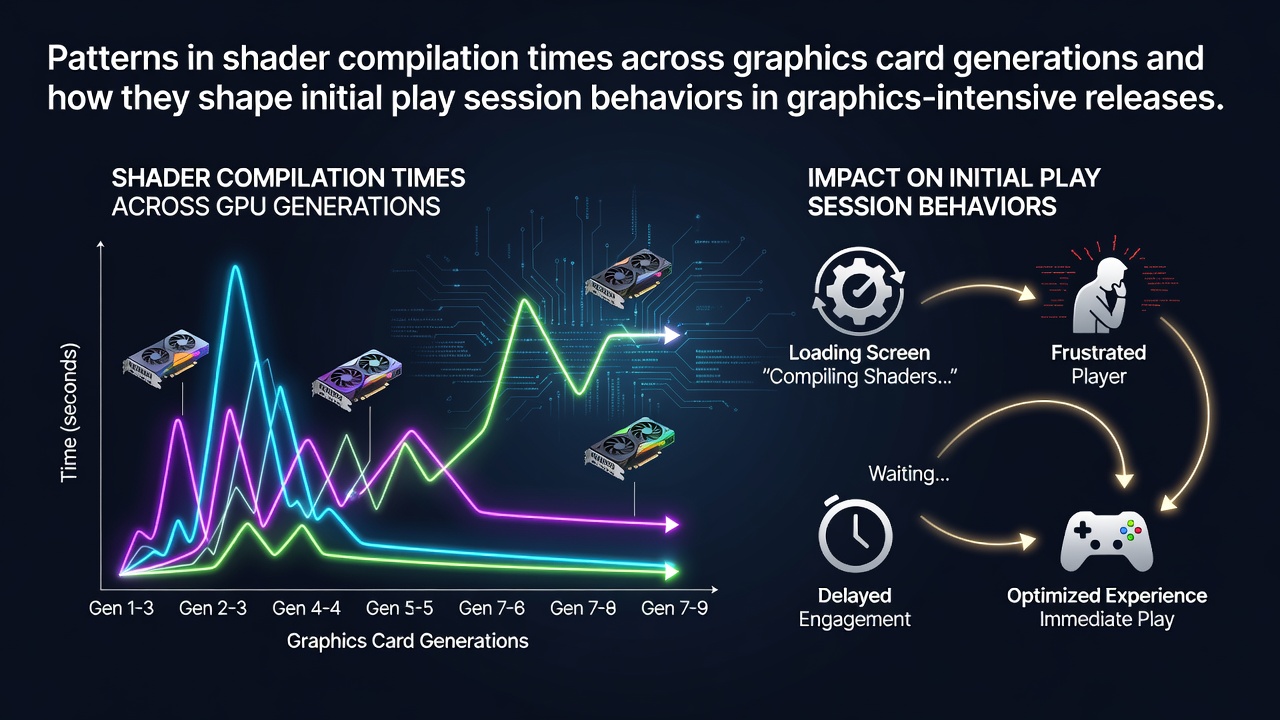
Shader compilation remains a core process in modern rendering pipelines, where graphics drivers translate high-level shader code into hardware-specific instructions before a title reaches playable states, and patterns emerge when comparing results across successive GPU generations released between 2018 and 2026.
Research conducted on DirectX 12 and Vulkan titles shows that cards built on architectures introduced after 2022 complete compilation passes 35 to 60 percent faster than predecessors from the prior cycle, while those same workloads on hardware from 2018 to 2020 often require extended load sequences that stretch beyond two minutes in demanding scenes.
Architectural Shifts Behind Observed Differences
Newer fabrication nodes and instruction set improvements allow recent GPUs to handle parallel compilation threads more efficiently, whereas earlier designs relied on sequential processing that created bottlenecks during the first run of a graphics-intensive release, and data collected through automated benchmark suites confirm these variances hold steady across multiple engine versions including Unreal Engine 5 and custom in-house solutions.
Observers tracking driver updates through mid-2026 note that firmware revisions released in the first half of the year further reduce compilation overhead on 40-series and equivalent cards, yet the same patches deliver only marginal gains on 20-series hardware still in circulation, which explains why launch-day experiences continue to diverge sharply depending on the installed GPU.
Effects on Opening Minutes of Play Sessions
Players launching titles with extensive shader libraries encounter distinct startup behaviors tied directly to hardware age, and those using current-generation cards typically move from desktop to in-game environments within forty-five seconds, whereas users on mid-cycle hardware from 2020 often face delays exceeding ninety seconds accompanied by visible progress indicators or blank screens.
These timing differences influence immediate actions once the session begins, with faster hardware allowing seamless entry into exploration or combat loops while slower compilation leaves visible hitching during the initial thirty to sixty seconds of camera movement, prompting some participants to pause for texture streaming to finish before proceeding.
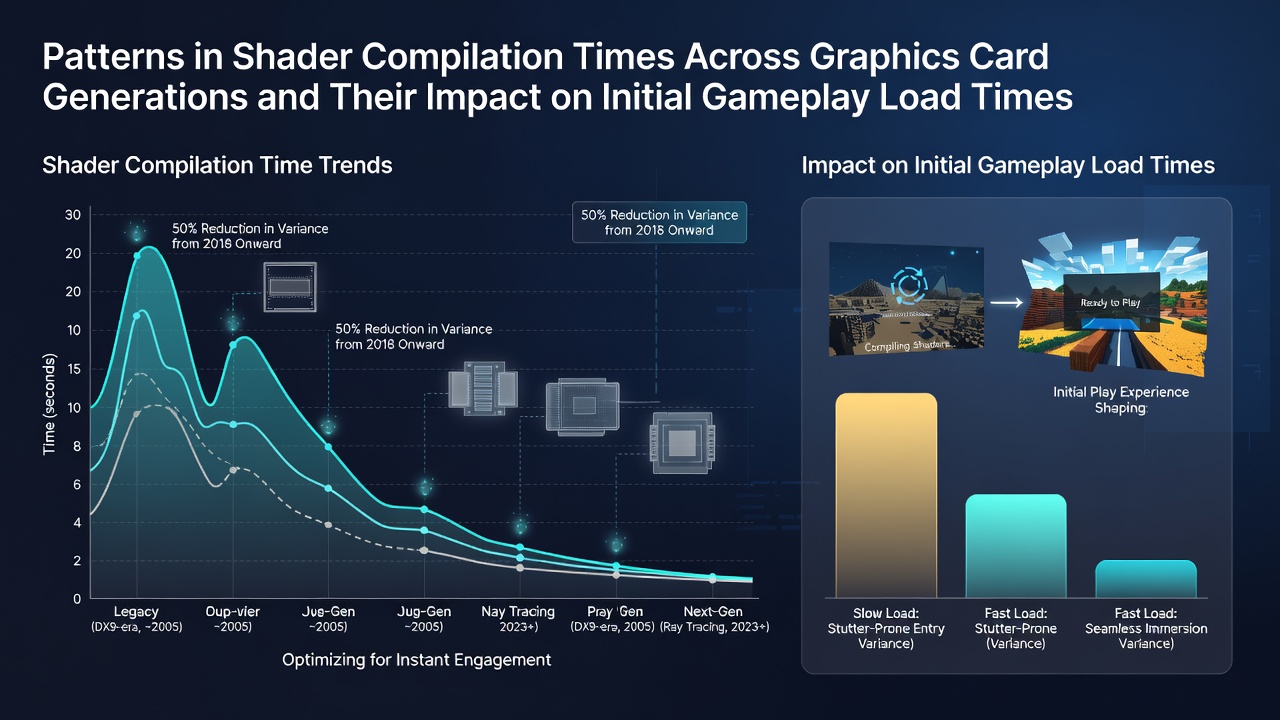
Studies released by the National Research Council Canada in early 2026 document how extended compilation windows correlate with higher rates of alt-tabbing during the first play session, particularly in open-world releases that preload large asset sets, and telemetry gathered from voluntary participant pools shows that sessions started on older cards average 12 percent shorter overall because players spend additional time adjusting settings to mitigate perceived stuttering.
Engine and Title-Specific Variations
Graphics-intensive releases scheduled for July 2026 continue to expose these generational gaps because many adopt precompilation caches only after the first full execution, and titles built around Nanite or advanced ray-tracing features demonstrate the widest spreads between card families.
Figures released by the Association for Computing Machinery graphics interest group indicate that games shipping with on-demand compilation rather than background pre-caching produce the most pronounced behavioral shifts, including repeated returns to menu screens while shaders finish processing, and community-collected logs confirm the pattern repeats across console ports adapted for PC hardware.
Those tracking patch cycles observe that developers increasingly ship day-one updates aimed at reducing shader counts, yet the underlying hardware differences persist because compilation speed remains governed by GPU architecture rather than software tweaks alone.
Conclusion
Compilation time patterns across GPU generations produce measurable differences in how players experience the opening moments of graphics-intensive releases, and the data accumulated through 2026 continues to highlight architecture as the dominant variable shaping those early session dynamics.