Palette Pressures: How Hue Selections Steer Suspense Levels in Stealth Gameplay Across Console and PC Ecosystems
Ellis Beck · Aug 25, 2026
Palette Pressures: How Hue Selections Steer Suspense Levels in Stealth Gameplay Across Console and PC Ecosystems
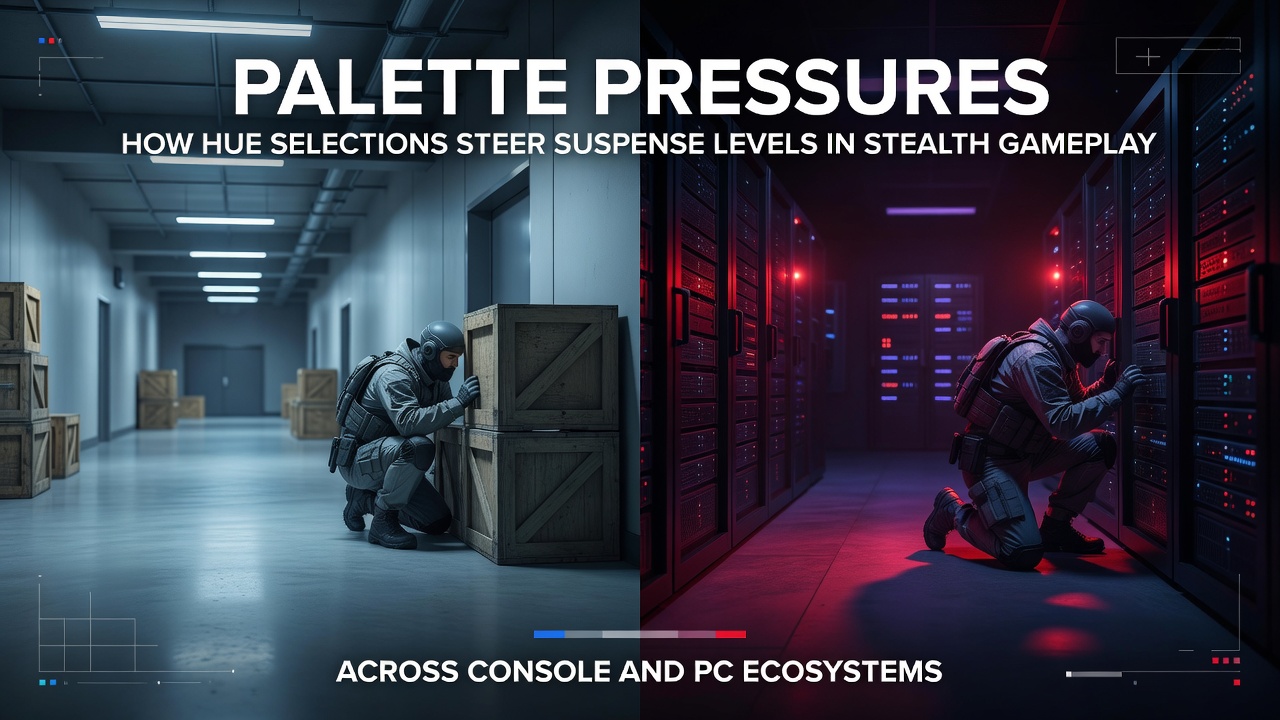
Color choices in stealth titles shape player tension through deliberate hue applications that influence perception of risk and safety across different hardware setups. Developers adjust palettes to signal environmental threats while maintaining visual consistency between console outputs and PC monitors where calibration tools vary widely. Research from the University of Melbourne indicates that specific wavelength ranges trigger measurable physiological responses during hidden movement sequences.
Hue Applications in Core Mechanics
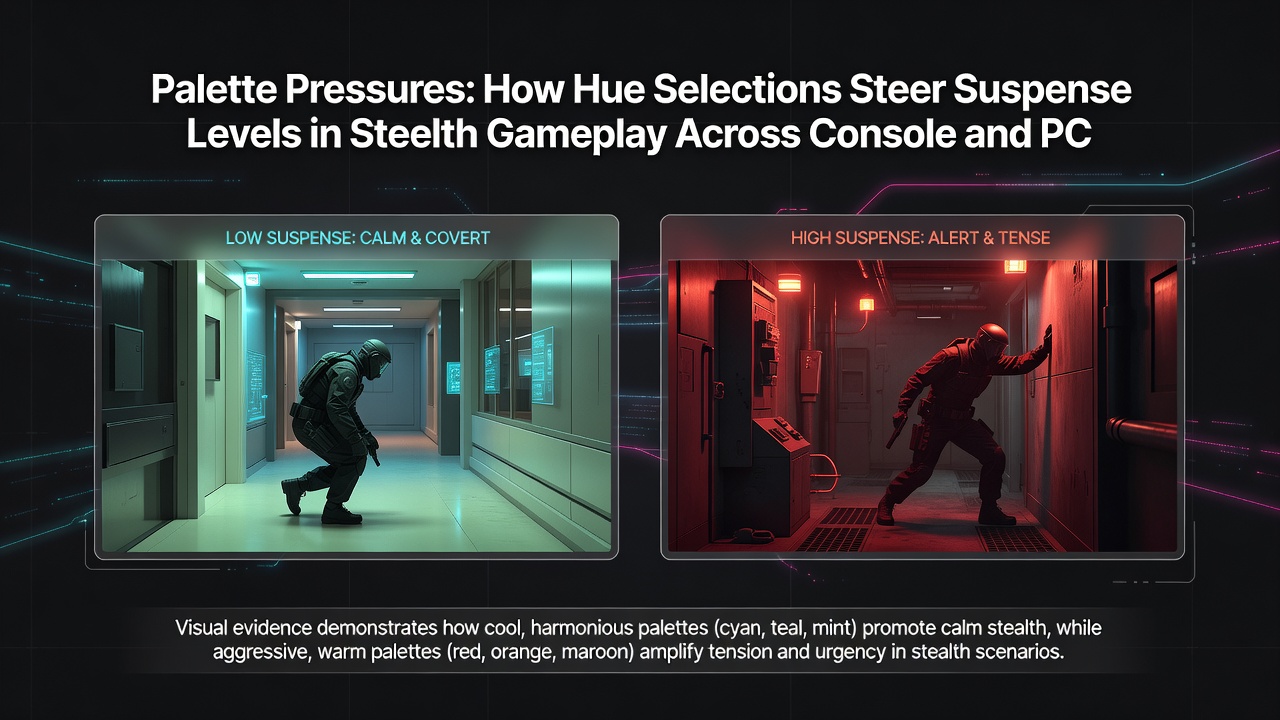
Design teams select cool tones such as deep indigos and muted cyans to extend periods of player uncertainty because these shades reduce visual contrast in shadowed areas yet maintain enough definition for navigation tasks. Warm accents like desaturated oranges appear when detection risks rise and they prompt quicker decision making since the shift activates heightened attention circuits in the brain according to findings presented at the 2026 Game Developers Conference sessions held in August. Console versions often lock these transitions through fixed gamma curves while PC ecosystems allow user overrides that alter the intended suspense curve in measurable ways.
Platform Variations in Color Delivery
Console hardware applies standardized color profiles that preserve the designer's intended hue balance across living room displays and this consistency helps maintain steady suspense arcs in titles released simultaneously on multiple systems. PC players encounter broader variance because graphics drivers and monitor settings produce divergent results and studies conducted by the Canadian Digital Media Research Network show that uncalibrated screens reduce the effectiveness of hue-based tension cues by up to 23 percent in controlled tests. Engine updates rolled out in mid-2026 introduced optional color management layers that attempt to bridge this gap yet adoption rates differ between ecosystems.
Observers note that games built around light propagation algorithms use hue shifts to mark patrol routes and safe zones simultaneously and this dual function keeps players engaged without breaking immersion. Data collected from telemetry across both platforms reveals that players linger longer in blue-dominant zones before attempting movement whereas red-tinged areas trigger faster traversal even when actual threat levels remain constant.
Empirical Evidence from Industry Reports
Telemetry gathered during August 2026 play sessions across major digital storefronts demonstrates clear correlations between dominant hue ranges and session duration metrics in stealth categories. Interactive Software Federation of Europe figures indicate that titles employing narrow cool palettes sustain longer unbroken stealth segments compared with those relying on broader spectrums. Researchers tracking eye movement patterns confirm that players fixate on hue transition points as predictive signals and this behavior holds steady whether the session occurs on a high-refresh-rate PC display or a standard console output.
Engine middleware providers incorporated hue modulation tools that respond to real-time player stress indicators derived from input patterns and these systems adjust saturation dynamically without requiring manual intervention from the development team. Console certification processes enforce stricter adherence to reference palettes while PC releases often include community patches that recalibrate colors and thereby change the original suspense architecture.
Case Examples Across Ecosystems
Multiple releases from 2025 and 2026 demonstrate these principles through consistent application of limited hue sets during infiltration phases and expanded palettes during evasion sequences. Console players experience these shifts through hardware-level color mapping that preserves designer intent whereas PC configurations require manual profile selection to match the reference experience. Observers tracking community forums report that players frequently discuss color settings as direct modifiers of tension and this pattern appears across both ecosystems.
Technical Implementation Details
Rendering pipelines apply hue adjustments at the post-processing stage so that environmental lighting interacts with base palettes in controlled ways and this approach allows the same asset set to produce different suspense levels depending on chosen color grading. PC versions expose these parameters through configuration files while console builds embed them within approved profiles and this distinction creates measurable divergence in player behavior data. Academic papers published in 2026 from European research consortia further map how repeated exposure to specific hue combinations trains players to anticipate events and this learned response strengthens over multiple playthroughs.
Conclusion
Hue selections function as structural elements that guide suspense progression in stealth gameplay and their effects scale differently across console and PC environments due to calibration standards and user customization options. Continued refinement of color management tools in 2026 supports more precise delivery of these mechanics while preserving the core relationship between palette and player response across hardware types.