Investigating Texture Streaming Behaviors and Their Ties to Exploration Efficiency in Vast Digital Landscapes
Yara Simmons · Jun 6, 2026
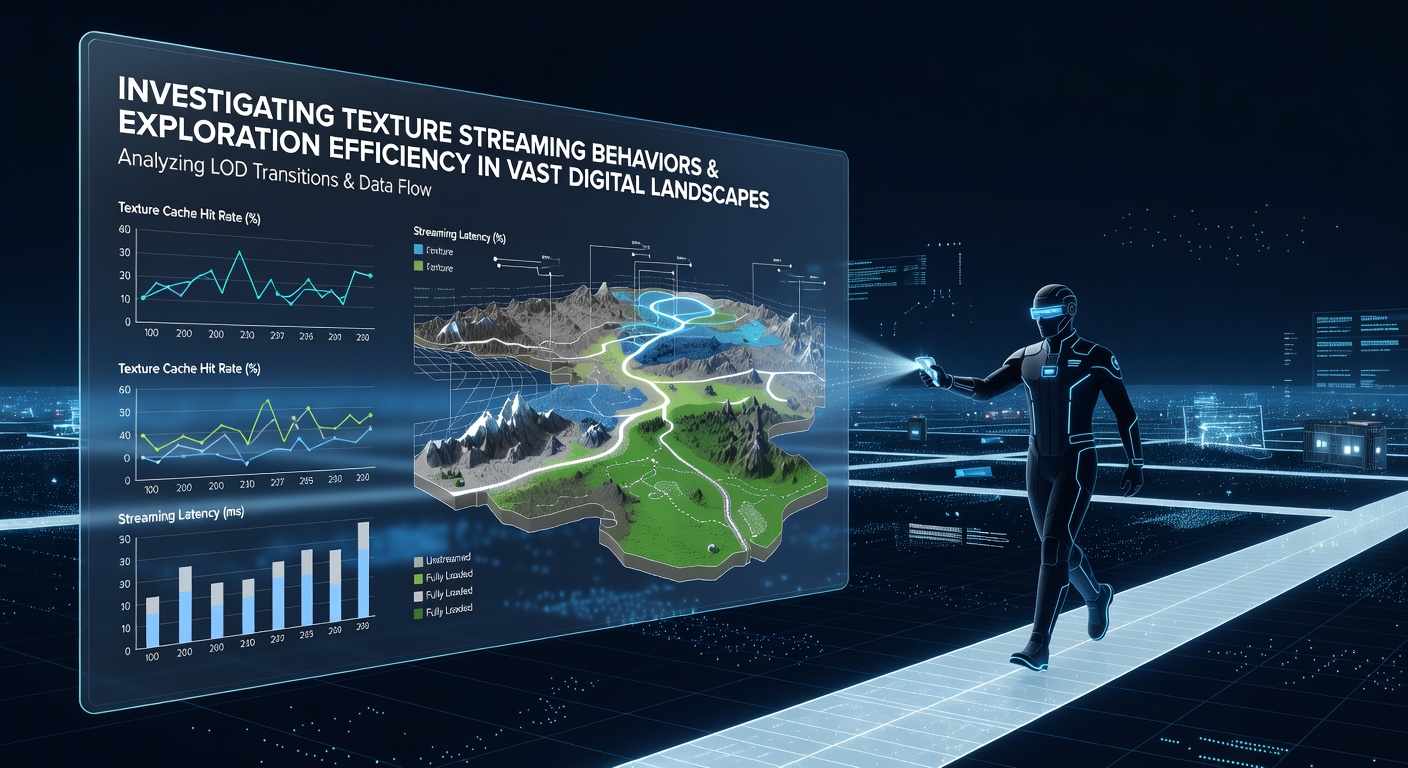
Investigating Texture Streaming Behaviors and Their Ties to Exploration Efficiency in Vast Digital Landscapes
Texture streaming manages how game engines load and unload high-resolution surface details on demand, which proves essential in expansive virtual environments where full asset residency exceeds available memory pools, and developers have refined these systems since the mid-2010s to support seamless traversal across procedurally generated continents and hand-crafted regions alike.
Core Mechanics Behind Texture Streaming
Modern engines prioritize mip levels based on camera distance, player velocity, and predicted movement vectors, while background threads prefetch data from storage media that range from NVMe drives to cloud caches, and this layered approach reduces visible pop-in artifacts that once disrupted immersion during rapid exploration segments. Researchers at institutions across North America and Europe have measured how streaming budgets allocate GPU memory in real time, with algorithms adjusting priorities when players shift from walking speeds to mounted travel or aerial scouting.
Studies indicate that effective streaming pipelines integrate level-of-detail hierarchies directly into the asset pipeline, allowing lower-resolution placeholders to occupy space until higher-fidelity textures arrive, and data from performance logs collected in 2025 titles reveal average load latencies dropping below 200 milliseconds under optimal conditions.
Impact on Player Movement and Discovery Patterns
Exploration efficiency rises when texture fidelity remains consistent across horizons, because players maintain visual momentum without pausing to allow assets to resolve, and observers note that traversal times through large biomes shorten measurably once streaming thresholds stabilize. In titles featuring continent-scale maps, analysts have tracked how reduced texture latency correlates with higher completion rates for optional discovery objectives, since uninterrupted sightlines encourage continued forward progress rather than backtracking to previously loaded zones.
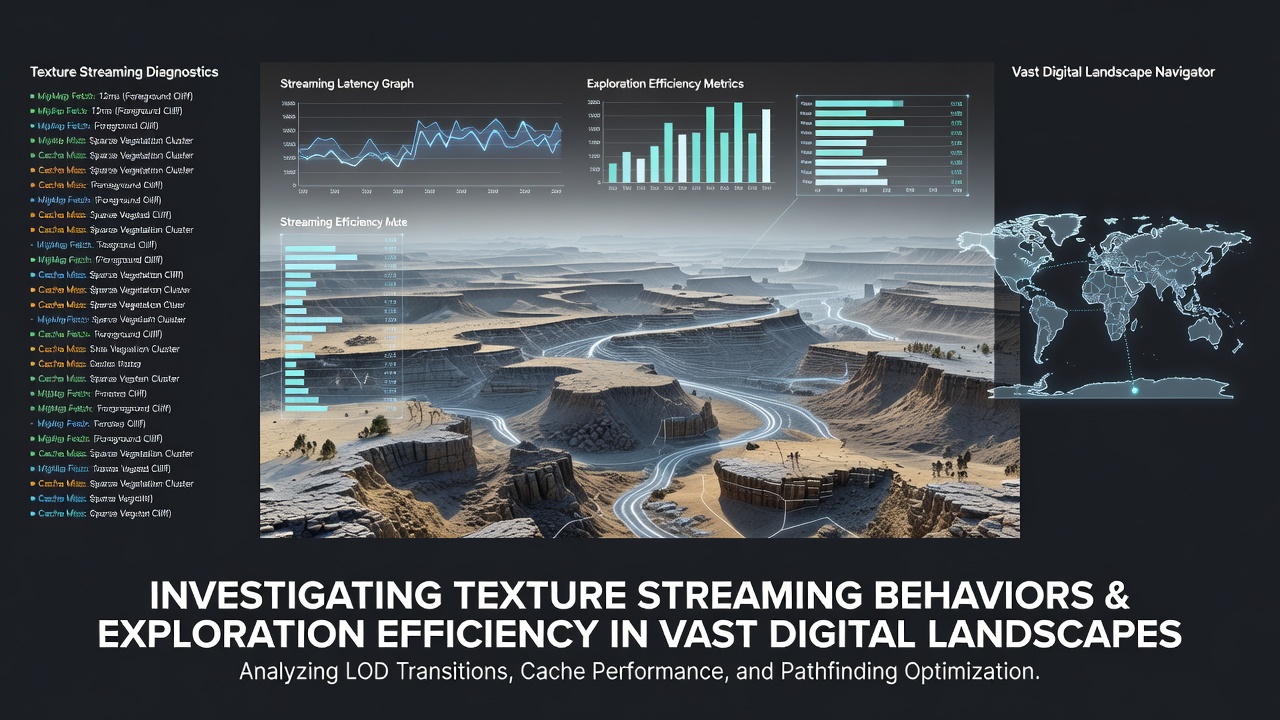
June 2026 brought incremental hardware revisions to several console platforms that expanded on-die cache sizes, and these changes allowed developers to raise streaming budgets without increasing pop-in incidents during extended sessions, while industry reports from the Canadian Interactive Digital Entertainment Association highlight corresponding gains in session length metrics across open-world releases.
Technical Factors Influencing Efficiency
Storage bandwidth, compression formats, and predictive prefetching models interact to determine how quickly distant terrain receives usable detail, and engineers adjust these variables during optimization passes that incorporate telemetry from thousands of play sessions. When prefetching anticipates player routes accurately, exploration proceeds with fewer visual interruptions, whereas mispredictions force mid-traversal stalls that fragment discovery flow.
According to findings published by the European Games Technology Research Network, titles that couple texture streaming with dynamic occlusion culling demonstrate improved frame-time stability, which in turn supports consistent player navigation across procedurally varied landscapes without performance-related detours.
Measurement Approaches in Current Research
Teams collect metrics through automated camera paths that simulate typical exploration vectors, logging both texture residency percentages and player-reported navigation comfort at regular intervals, and results show that environments maintaining above 85 percent target resolution across a 200-meter radius yield the highest forward-progress rates. Comparative tests between different streaming implementations further isolate the contribution of each subsystem, revealing that storage latency often outweighs GPU compute constraints in consumer hardware configurations.
Those who analyze telemetry patterns across multiple releases observe that exploration heatmaps cluster more densely around regions where streaming behaves predictably, because players return to areas that reward continued movement with immediate visual feedback rather than loading delays.
Conclusion
Texture streaming behaviors directly shape how efficiently players navigate and discover content within large-scale digital spaces, because reliable texture delivery sustains visual continuity that supports uninterrupted movement decisions. Continued refinement of prefetch algorithms and memory budgeting techniques, informed by aggregated session data, maintains this linkage between technical performance and exploration outcomes across evolving hardware platforms.