How Save File Architectures Steer Long-Term Decision Trees in Narrative-Driven Console Releases
Ellis Koch · Jun 11, 2026
How Save File Architectures Steer Long-Term Decision Trees in Narrative-Driven Console Releases
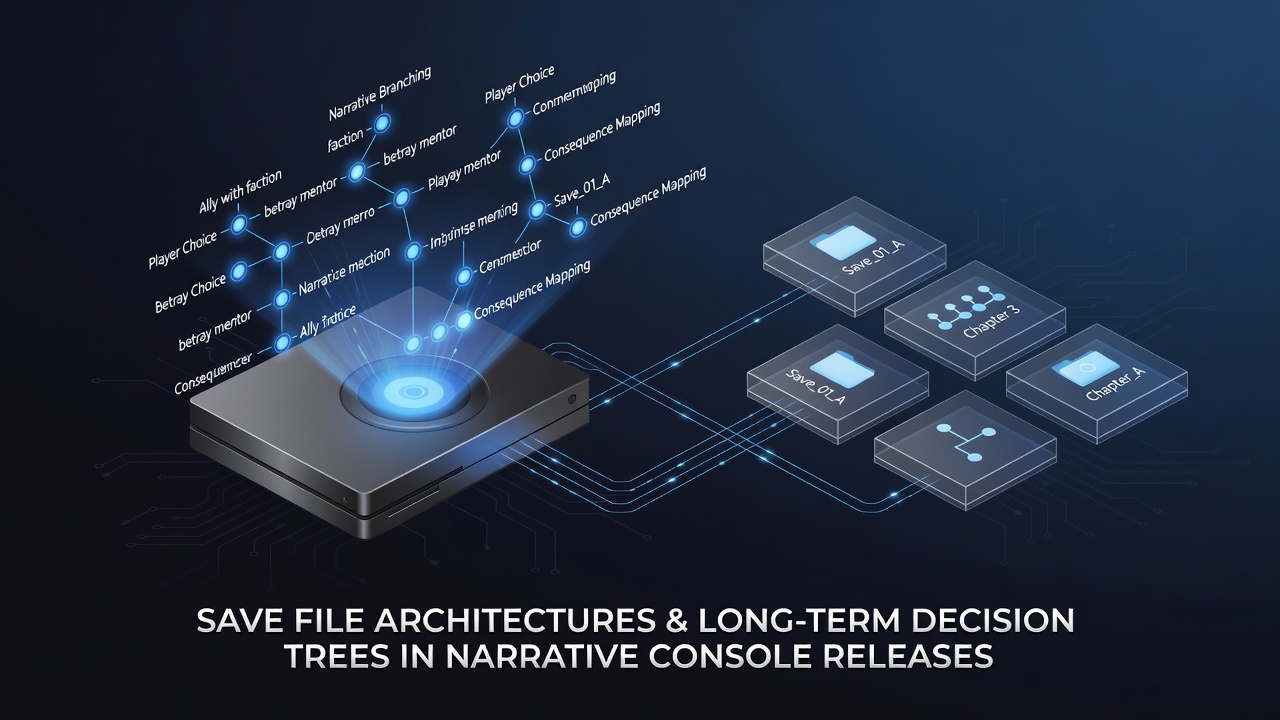
Save file architectures shape how players navigate branching narratives in console releases because they determine whether choices remain reversible or become permanent commitments. Console hardware constraints along with software design choices create distinct patterns in how decision trees unfold over dozens of hours. Data from industry reports shows that games with limited save options see higher rates of single-playthrough completion compared to titles offering flexible slot systems.
Observers note that single-slot designs lock players into early decisions which then cascade through later story segments without easy reversal. This structure appears frequently in narrative-driven console exclusives where developers aim to preserve tension across extended campaigns. Multiple save slots on the other hand permit experimentation that alters long-term outcomes and encourages repeated engagement with different branches.
Core Mechanics of Save Architectures on Consoles
Console platforms enforce specific rules around save persistence that directly influence narrative progression. Fixed autosave points combined with manual overwrite options create pressure points where players must decide whether to commit or backtrack. Studies from the Entertainment Software Association indicate that architecture variations account for measurable differences in completion metrics across similar story-heavy titles released between 2024 and 2026.
Cloud integration adds another layer because it synchronizes progress across devices yet often restricts manual slot management. Players encounter situations where an autosave from a previous session overrides local choices and steers the decision tree toward unintended paths. This synchronization pattern shows up consistently in cross-generation console releases that rely on unified account systems.
Impact on Branching Decision Trees
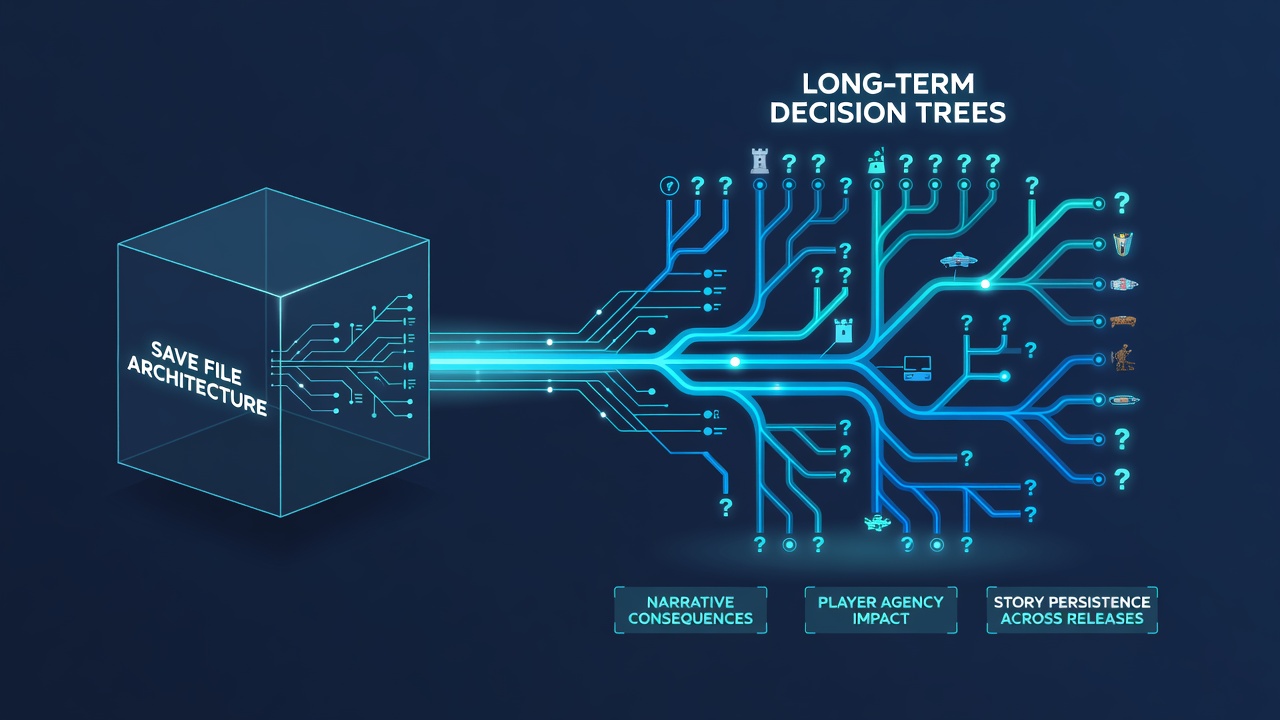
Long-term decision trees in narrative games depend on whether save systems allow parallel timelines or enforce linear progression. Titles that restrict players to one active file see fewer explorations of alternate endings because backtracking requires restarting entire sections. Research conducted at the University of Alberta demonstrates that such restrictions correlate with reduced replay activity in role-playing releases on major console platforms.
Flexible architectures permit players to maintain multiple concurrent states which supports testing of high-stakes choices without losing prior progress. Data collected through console telemetry reveals that games implementing generous slot counts record elevated engagement with side narratives and companion relationship systems over multi-month periods. The distinction becomes especially clear in releases that reached stores in early 2026 when hardware updates expanded local storage capacities.
Permadeath mechanics paired with minimal saves further narrow decision trees by eliminating safety nets. Console releases that adopt this approach report lower overall completion rates yet higher emotional investment among those who finish the campaign. Observers have tracked how these constraints push players toward conservative strategies that avoid risky dialogue options or exploration paths.
Patterns Observed in Recent Console Releases
As of June 2026 console narrative titles continue to refine save architectures based on player retention statistics. Developers now incorporate hybrid models that combine autosaves with limited manual overrides to balance accessibility against narrative integrity. These adjustments appear in both first-party exclusives and third-party ports that target PlayStation and Xbox ecosystems simultaneously.
Regional differences emerge when comparing European and North American releases where regulatory guidelines on consumer data influence cloud save policies. European titles more often default to explicit player consent screens before overwriting files whereas North American counterparts prioritize seamless progression. Such variations produce subtle shifts in how decision trees develop across global audiences.
Physical cartridge releases introduce additional considerations because limited onboard memory affects how many save states the game can retain. Collectors and digital purchasers experience different constraints that steer long-term engagement patterns differently. Industry analyses show cartridge-based narrative games maintain steadier replay curves when they include robust slot management compared to those that rely solely on cloud backups.
Technical Constraints and Player Adaptation
Console hardware imposes hard limits on simultaneous save files which forces design choices that ripple through narrative structures. Memory allocation for save data competes with other system resources and developers must weigh story complexity against technical feasibility. Players adapt by developing external tracking methods such as notes or community spreadsheets when internal architectures prove restrictive.
Telemetry from major platforms indicates that adaptive player behaviors emerge most strongly around mid-campaign choice points where consequences become irreversible. Those who encounter restrictive save systems tend to reload earlier checkpoints more frequently when available whereas users of expansive slot systems distribute their progress across multiple branches. These patterns hold across genres that emphasize character relationships and moral alignments.
Conclusion
Save file architectures function as invisible frameworks that guide how narrative decision trees expand or contract over time in console releases. The interplay between hardware limitations, cloud features, adn design philosophy creates consistent behavioral outcomes across different titles and regions. Data continues to accumulate showing that these systems exert measurable influence on completion rates, replay frequency, and engagement depth well into 2026 and beyond.