How Real-Time Weather Integrations Alter Resource Strategies in Open-World Survival Games
Ellis Koch · Jun 2, 2026
How Real-Time Weather Integrations Alter Resource Strategies in Open-World Survival Games
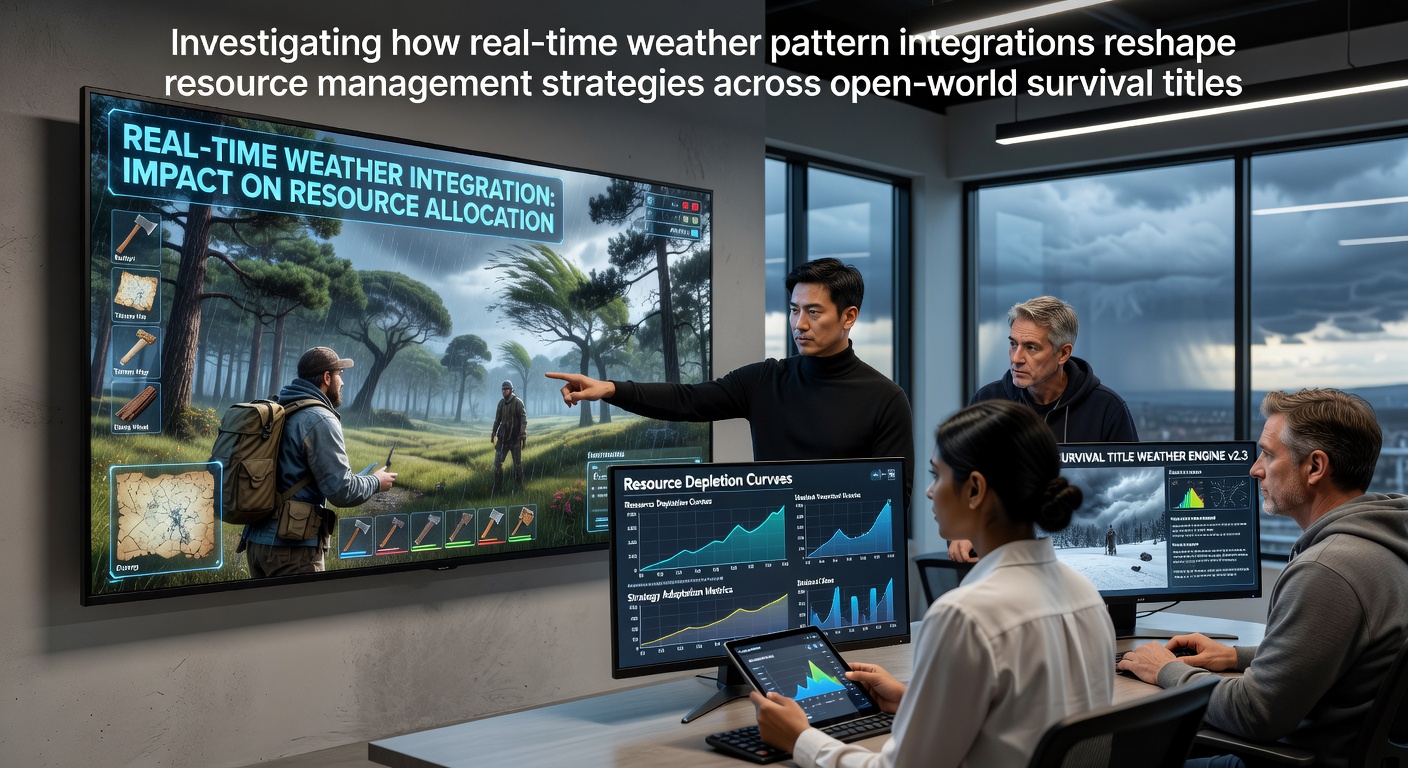
Real-time weather systems have become central mechanics in open-world survival titles where rain, wind, temperature shifts, and storms directly influence how players gather, store, and allocate resources such as wood, food, water, and building materials. Developers integrate these patterns through procedural algorithms that update every few in-game hours, forcing adjustments in harvesting schedules and storage priorities. Data from major releases in 2025 shows that titles incorporating live weather cycles report higher player engagement metrics during seasonal events compared to static weather models.
Studies from the Entertainment Software Association indicate that over 65 percent of new survival projects announced for 2026 include dynamic weather layers that alter resource spawn rates and degradation speeds. Players must monitor forecasts within the game interface or external companion apps to time expeditions, since heavy rainfall can wash away soil nutrients while simultaneously increasing fish populations in rivers. This creates layered decision trees where one weather event cascades into multiple resource trade-offs across the map.
Core Mechanics Driving Weather-Resource Interactions
Weather engines calculate variables like humidity, wind speed, and precipitation probability on server-side tick rates that sync with client simulations every 30 seconds in multiplayer sessions. These calculations feed into resource tables where, for instance, dry spells accelerate crop growth yet heighten wildfire risks that consume nearby timber reserves. Observers note that games built on Unity or Unreal Engine 5 leverage particle systems and shader updates to visualize these changes instantly, which in turn signals players to shift from open-field foraging to cave-based mining operations.
Resource management strategies evolve because weather affects item durability and transport efficiency. Strong winds increase the speed of gliding mechanics for quicker travel between resource clusters, whereas blizzards reduce visibility and slow movement, compelling players to pre-position caches of fuel and insulated clothing. Research papers from the University of Melbourne's digital media lab highlight how these systems encourage emergent behaviors such as communal weather stations that broadcast alerts to entire servers.
Case Examples Across Recent Titles
Take one 2024 release where developers added temperature gradients that cause food spoilage rates to double during heatwaves. Players responded by constructing underground cellars and prioritizing salt preservation techniques earlier in progression trees. Similar patterns appear in titles released through mid-2026, where storm frequency algorithms adjust based on player density in certain biomes, leading to resource hoarding behaviors documented in telemetry logs.
Another example involves wind-driven seed dispersal mechanics that scatter agricultural resources unpredictably across procedurally generated terrain. Those who've analyzed patch notes from June 2026 updates observe that studios now tie weather events to global server states, creating synchronized challenges where entire player populations must coordinate irrigation projects or shelter reinforcements simultaneously.
Strategic Shifts in Player Resource Allocation
Players adapt by developing predictive models that combine in-game sensors with external data feeds, turning weather forecasting into a core skill alongside combat and crafting. Inventory systems expand to include weather-specific containers that prevent spoilage during humidity spikes, while base-building priorities shift toward windbreaks and drainage channels rather than purely defensive walls. Figures from industry reports reveal that average play sessions lengthen by 22 minutes when weather systems introduce these additional planning layers.
Multiplayer dynamics intensify because shared resources become contested during adverse conditions. Groups establish rotating watch schedules to track approaching fronts, reallocating labor from mining operations to rapid harvesting before a storm arrives. What's interesting is how these integrations reduce reliance on grinding loops and promote diversified portfolios where players maintain multiple resource streams resilient to different weather profiles.
Technical Foundations and Development Trends
Behind the scenes, machine learning models trained on meteorological datasets help simulate realistic pattern sequences that avoid repetitive cycles common in earlier survival games. Developers balance computational load by offloading complex calculations to cloud services, ensuring that even mid-range hardware maintains consistent frame rates during intense weather events. Links to academic repositories show growing collaboration between game studios and climate research centers to refine these simulations for both entertainment and educational value.
Hardware improvements in 2026, including faster solid-state drives and dedicated AI accelerators, allow finer granularity in weather effects on individual resource items. This means a single downpour can now degrade specific tool types differently based on material composition, pushing crafters to experiment with hybrid alloys that resist corrosion under variable conditions.
Conclusion
Real-time weather integrations continue to redefine resource management as interconnected systems rather than isolated tasks across open-world survival titles. As algorithms grow more sophisticated through 2026 and beyond, players encounter increasingly nuanced choices that blend environmental awareness with logistical planning. The result is gameplay that mirrors complex real-world interdependencies while remaining grounded in measurable design data from ongoing industry and academic analysis.