How Dynamic Lighting Shifts Influence Navigation Choices in Dimly Lit Horror Environments Across Console Generations
Klara Wolf · Jun 27, 2026
How Dynamic Lighting Shifts Influence Navigation Choices in Dimly Lit Horror Environments Across Console Generations
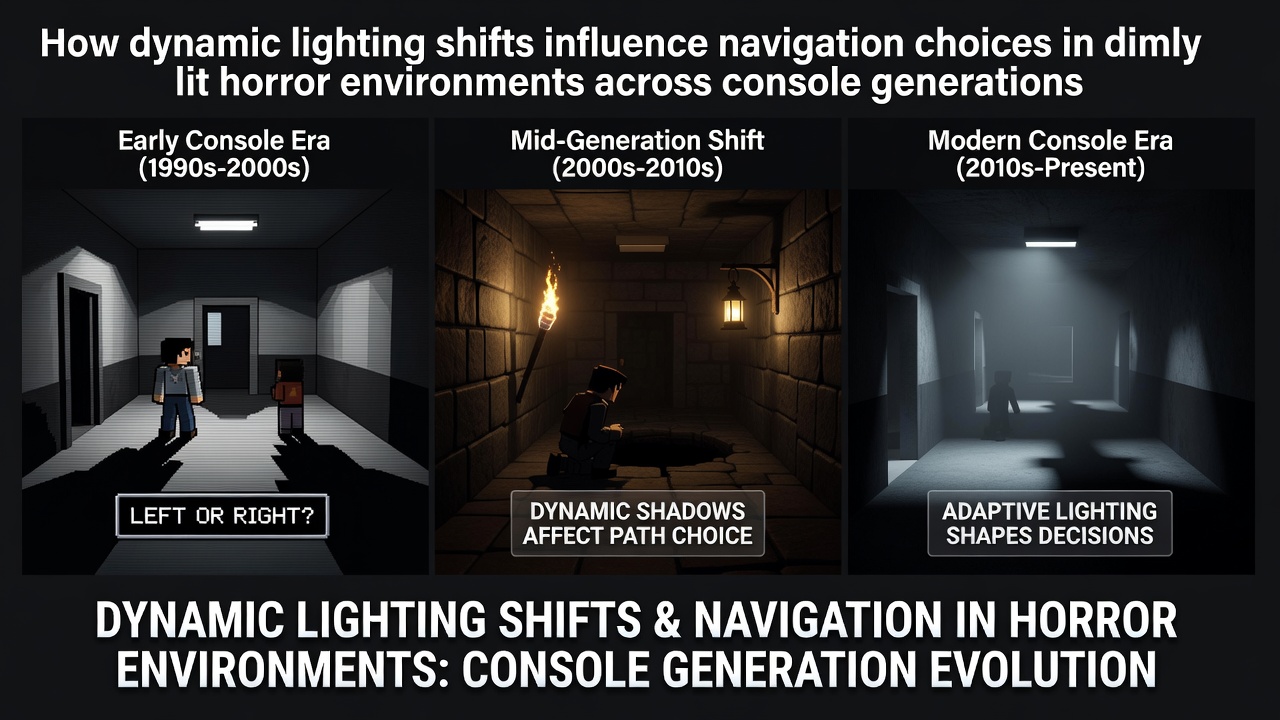
Console hardware advancements have reshaped how players move through dimly lit horror spaces, with lighting systems evolving from fixed light sources on early systems to real-time dynamic adjustments on later platforms. Early generations like the PlayStation and Nintendo 64 relied on pre-rendered shadows and limited color palettes, so navigation often depended on environmental landmarks that remained consistent regardless of player position, according to technical analyses from the ACM Digital Library on legacy rendering techniques.
Early Console Limitations and Predictable Paths
Developers working on titles for the original PlayStation and Sega Saturn faced strict polygon budgets that restricted light calculations to static placements, meaning corridors stayed uniformly dark except where fixed spotlights highlighted key items or threats. Players adapted by memorizing safe routes through repeated play sessions since lighting did not respond to movement or time-based events, and data from console architecture studies shows these constraints led to exploration patterns centered on audio cues rather than visual shifts.
By the time the PlayStation 2 and original Xbox arrived, incremental improvements in texture mapping allowed for basic dynamic shadows that flickered with character proximity, yet the core navigation logic stayed tied to memory of unchanging layouts. Observers note that horror sequences in this era rewarded methodical backtracking because light transitions happened on fixed timers instead of reacting to player choices.
Mid-Generation Advances and Reactive Environments
Hardware from the PlayStation 3 and Xbox 360 introduced shader models capable of handling multiple light sources simultaneously, enabling horror environments where flashlight beams or distant glows altered visibility based on player orientation. This change meant navigation decisions hinged on whether certain paths became temporarily safer or more hazardous as lights moved, with figures from industry reports revealing increased use of trial-adn-error movement in response to shifting illumination.
Games on these platforms often layered particle effects over light sources to simulate dust or fog that scattered beams differently depending on angle, so explorers learned to test corners by stepping forward and watching how shadows reformed. Researchers have documented that such mechanics encouraged slower, deliberate pacing compared to earlier static setups.
Current-Generation Dynamics and Real-Time Adaptation
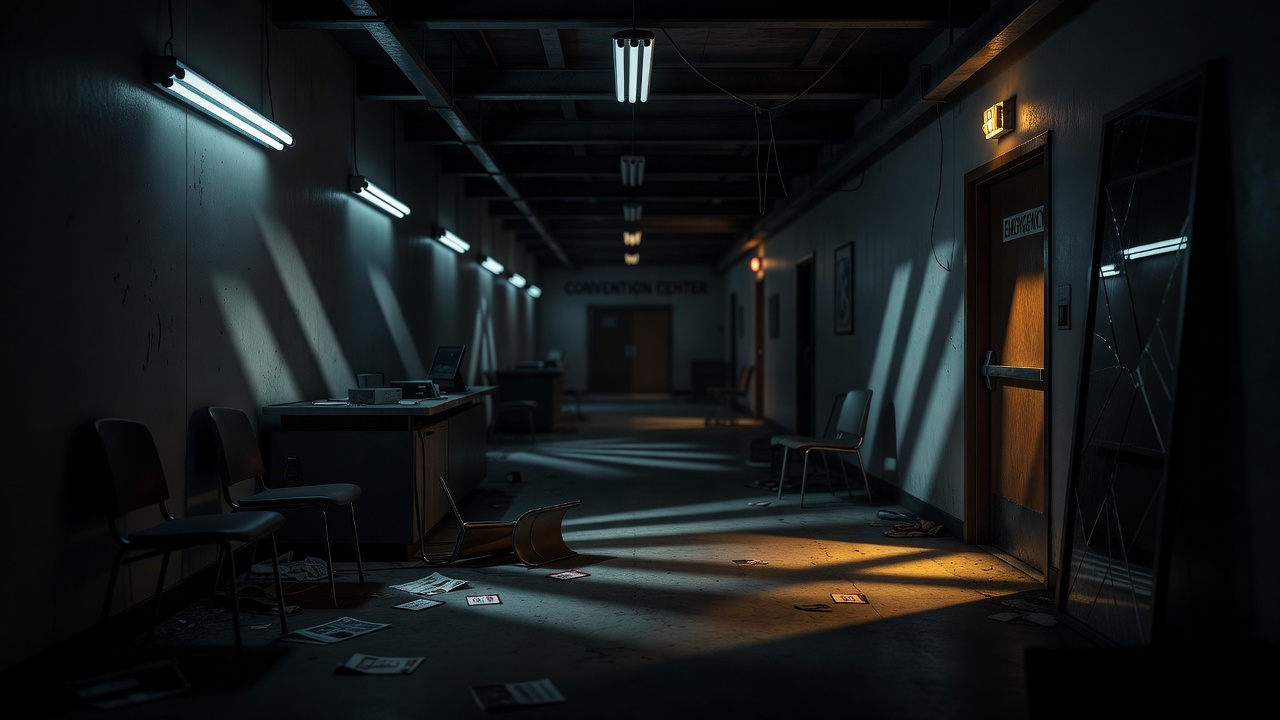
Systems released after 2013, including the PlayStation 4, Xbox One, and their successors, support advanced lighting engines that recalculate shadows and highlights multiple times per second. In these environments, navigation choices frequently shift when a light source moves because previously hidden threats become visible or safe routes suddenly darken, and technical benchmarks from console development kits confirm the jump in computational capacity that made this possible.
By June 2026, ongoing optimizations in game engines have further refined how dynamic lights interact with player movement, allowing sequences where environmental changes like storms or power fluctuations redirect attention toward alternative exits. Those who study player telemetry across platforms report that participants now adjust routes mid-session based on light intensity gradients rather than fixed maps.
Cross-generation comparisons highlight how Nintendo platforms maintained simpler lighting models longer due to portability priorities, resulting in navigation that blends static and dynamic elements even in later Switch titles. In contrast, high-end Sony and Microsoft hardware pushed real-time global illumination techniques that reward quick visual scanning before committing to a path.
Platform-Specific Navigation Patterns
Data collected from multiple console releases indicates that lighting responsiveness correlates with changes in exploration efficiency, particularly when players must decide between well-lit but exposed areas versus darker but concealed passages. On earlier hardware the choice stayed binary because lights did not adapt, whereas later systems introduce probabilistic elements where a moving shadow might signal an approaching entity or simply an environmental effect.
Developers have implemented layered lighting layers that combine static background illumination with dynamic foreground sources, creating situations where navigation becomes a process of interpreting light behavior over time. Studies on console rendering pipelines show these layers require more processing power yet produce measurable differences in how long players spend orienting themselves before advancing.
Conclusion
Lighting technology progression across console generations has directly altered the decision trees players follow in horror settings, moving from reliance on unchanging visual markers to interpretation of fluid, reactive illumination. Each hardware leap introduced new variables that reshaped route selection, with current platforms emphasizing real-time adaptation as the primary driver of movement choices.