Exploring Synchronization Patterns Between Player Input Rhythms and Character Animation Frames in Rhythm-Action Hybrids
Ellis Koch · Jul 18, 2026
Exploring Synchronization Patterns Between Player Input Rhythms and Character Animation Frames in Rhythm-Action Hybrids
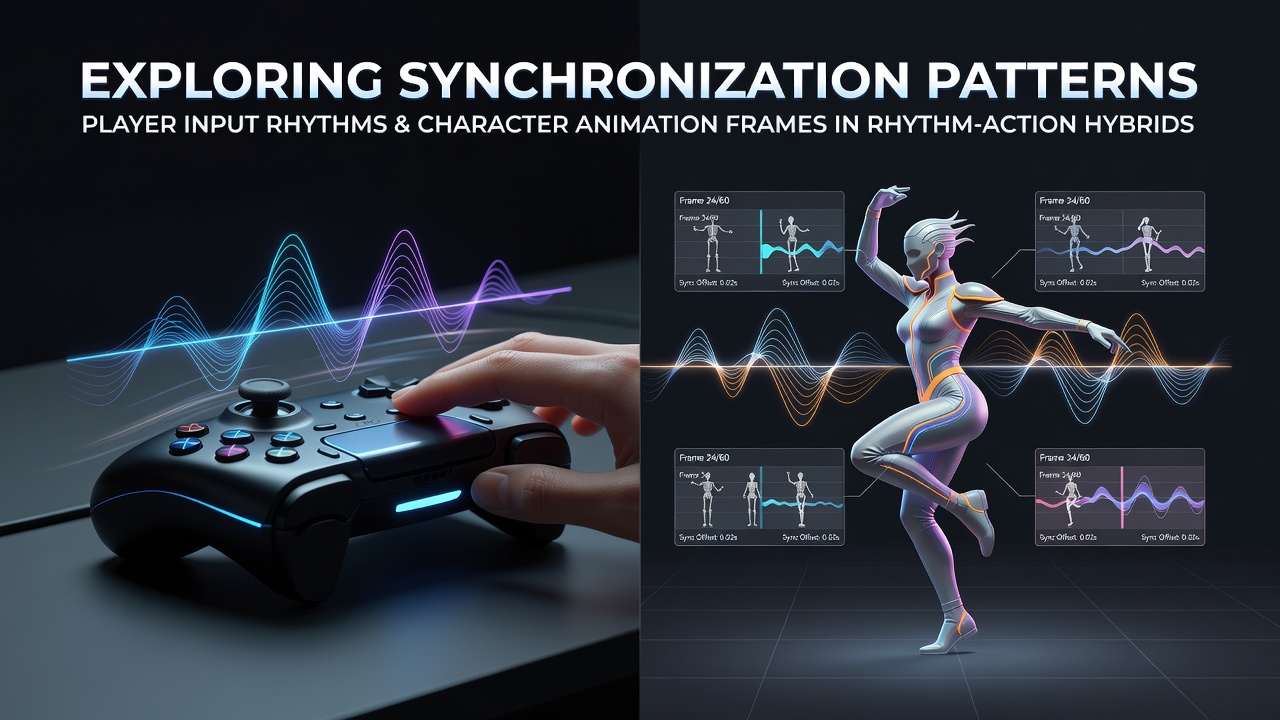
Rhythm-action hybrids blend musical timing with character control systems, where inputs from controllers or peripherals trigger specific animation sequences that must align with beat structures in the soundtrack. These games process player actions through polling intervals that often run at 1000Hz on modern hardware, while character animations advance at fixed frame rates such as 60 frames per second. Developers calibrate timing windows to accommodate these differences, creating patterns where successful inputs advance animation states without visible desync. Hardware variations influence how these patterns manifest across platforms. Console versions may buffer inputs differently than PC builds due to USB polling rates and display refresh cycles, leading researchers to document distinct synchronization curves in titles like those using custom engine timing layers. Data collected from multiple releases shows that frame-perfect matches occur when input detection overlaps with animation keyframe transitions by less than 16.67 milliseconds at standard frame rates.Core Technical Mechanisms
Animation systems in these hybrids rely on state machines that advance through predefined cycles triggered by successful input detection. Each musical beat maps to a sequence of frames, and the engine compares incoming signals against a tolerance band that expands or contracts based on difficulty settings. Studies from institutions such as the Entertainment Software Association indicate that average synchronization success rates hover between 85 and 92 percent when players maintain consistent rhythm across extended play sessions.
Particle effects and secondary animations often layer on top of primary character movements, requiring additional timing buffers to prevent visual conflicts. When an input lands early or late within the window, the system selects alternate animation branches that still complete on the musical downbeat, preserving the illusion of rhythmic flow even during minor timing deviations.
Observed Patterns Across Game Titles
Patterns emerge when comparing input density to animation complexity. Games with sparse note charts tend to use longer animation loops that allow recovery time between inputs, whereas dense sequences employ shorter frames that demand tighter alignment. Observers note that character models in 2025 releases frequently incorporate secondary motion layers, such as cloth simulation or facial expressions, which activate only when primary input timing falls within the central 50 percent of the acceptable window.
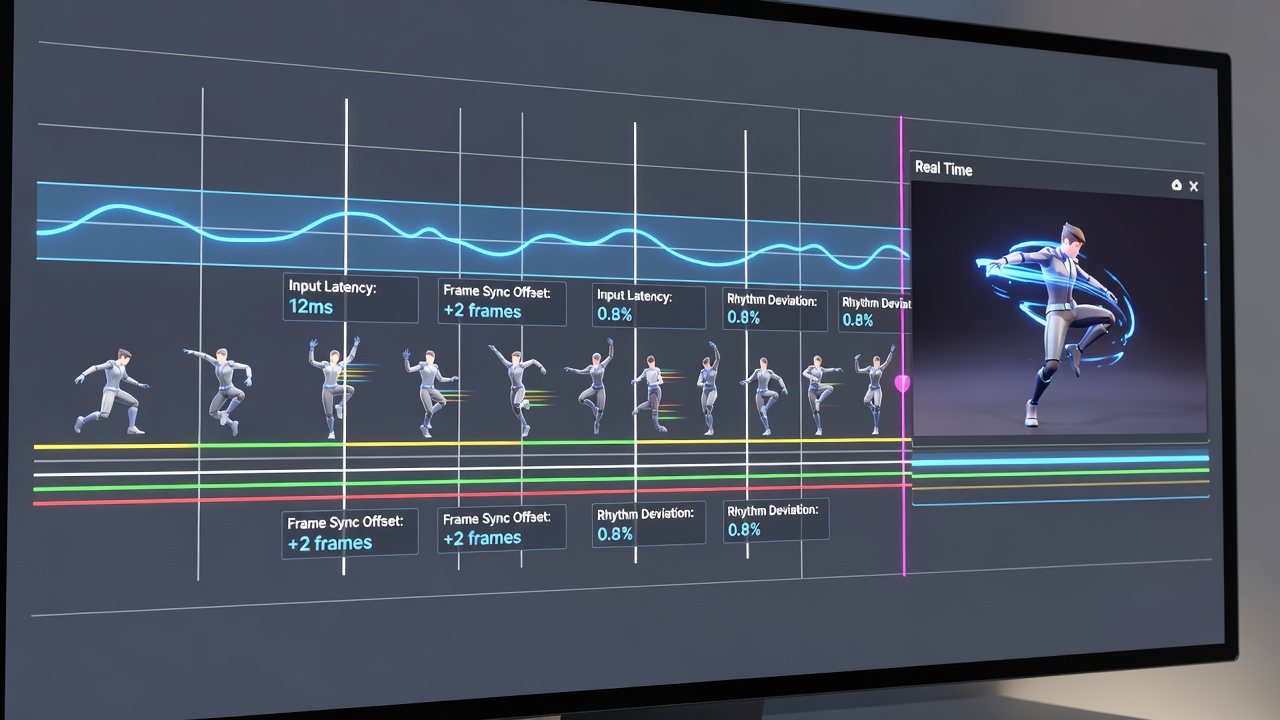 In July 2026 developers presented updated synchronization tools at industry events that allow real-time adjustment of animation playback speeds based on detected player tempo variations. These tools sample input intervals over rolling windows of eight beats and adjust frame interpolation rates accordingly. Figures from engine documentation reveal that such adaptive systems reduce perceived lag by up to 12 milliseconds compared with static timing models.
Platform and Hardware Considerations
Cross-platform releases reveal measurable differences in how input rhythms translate to animation frames. Mobile versions often increase tolerance windows to account for touch latency, while dedicated arcade cabinets maintain tighter thresholds supported by specialized input hardware. Research conducted through Canadian academic partnerships has tracked these variations across dozens of titles, showing that animation frame drops occur most frequently when input queues exceed hardware buffer limits during rapid note streams.
Networked multiplayer modes introduce further variables, as client-side prediction must reconcile local input timing with remote animation states. Developers implement rollback mechanisms that prioritize musical beat alignment over exact frame matching, ensuring that desynchronized players still perceive coherent character performances.
Measurement and Analysis Methods
Analysts employ frame capture tools alongside input logging software to map precise relationships between button presses and animation state changes. These datasets allow identification of recurring patterns such as anticipatory inputs that occur 30 to 50 milliseconds before beat markers in high-difficulty charts. University-led examinations have quantified how visual feedback cues, including screen flashes or particle bursts, influence subsequent input accuracy by reinforcing the established synchronization loop.
Engine telemetry collected from live service titles provides ongoing data streams that developers use to refine timing windows in post-launch patches. Adjustments often target specific animation sequences where players consistently miss inputs due to frame timing conflicts rather than rhythmic ability.
Conclusion
Synchronization patterns between player input rhythms and character animation frames form a foundational element of rhythm-action hybrid design. Technical implementations continue to evolve through refined engine tools and hardware improvements that maintain alignment across diverse platforms and input methods. Ongoing measurements and platform-specific calibrations support consistent performance delivery while accommodating the range of player skill levels present in these experiences.