Examining Physics Engine Refinements and Their Role in Shaping Movement Mechanics Across Platformer Franchises Spanning Multiple Hardware Generations
Katja Keller · Jun 30, 2026
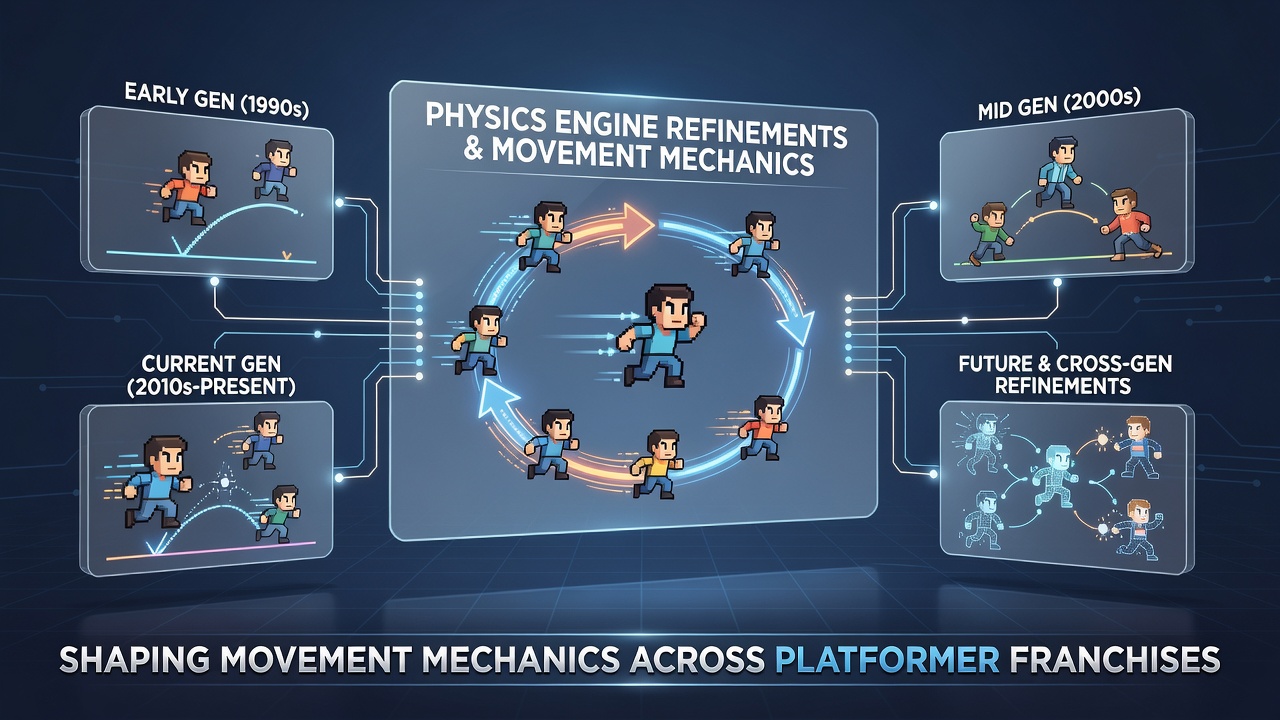
Examining Physics Engine Refinements and Their Role in Shaping Movement Mechanics Across Platformer Franchises Spanning Multiple Hardware Generations
Platformer franchises have relied on incremental physics engine updates to define how characters navigate levels, and these changes track closely with hardware shifts from 8-bit systems through modern consoles. Early implementations handled basic gravity and collision detection on limited processors, while later refinements introduced momentum preservation, variable friction, and dynamic object interactions that altered core movement loops in titles spanning decades.Constraints of Early Hardware Generations
During the 8-bit and 16-bit eras, developers coded movement directly into hardware limitations without dedicated physics middleware, so characters in series like Super Mario Bros. followed fixed jump arcs determined by simple velocity tables updated at 60 frames per second on the NES. Those who studied these systems note that collision responses remained binary, either blocking progress or allowing passage, because memory constraints prevented continuous simulation of forces across multiple objects.
Transitioning into the 32-bit and 64-bit periods brought floating-point calculations that supported more nuanced acceleration curves, yet frame-rate inconsistencies on original PlayStation hardware sometimes caused momentum to reset unexpectedly during platform transitions. Researchers documented how Sonic the Hedgehog entries adapted by layering custom velocity caps onto the Genesis processor, creating consistent top speeds that carried across loops and ramps without full rigid-body solvers.
Introduction of Middleware and 3D Transitions
Once 3D platformers emerged, engines such as those powering Super Mario 64 incorporated analog stick input mapping to three-dimensional vectors, allowing momentum to persist during turns rather than snapping to new directions. Observers have tracked how this shift required developers to recalibrate gravity scalars and air control values because analog precision exposed gaps in the discrete input handling of prior generations.
By the sixth and seventh console generations, middleware like Havok and PhysX provided standardized solvers that handled stacked objects and breakable terrain, and franchises including Ratchet and Clank integrated these tools to let movement interact with environmental destruction in real time. Data from industry reports shows that integration reduced custom code overhead while introducing predictable responses to player-initiated forces across varied surface materials.
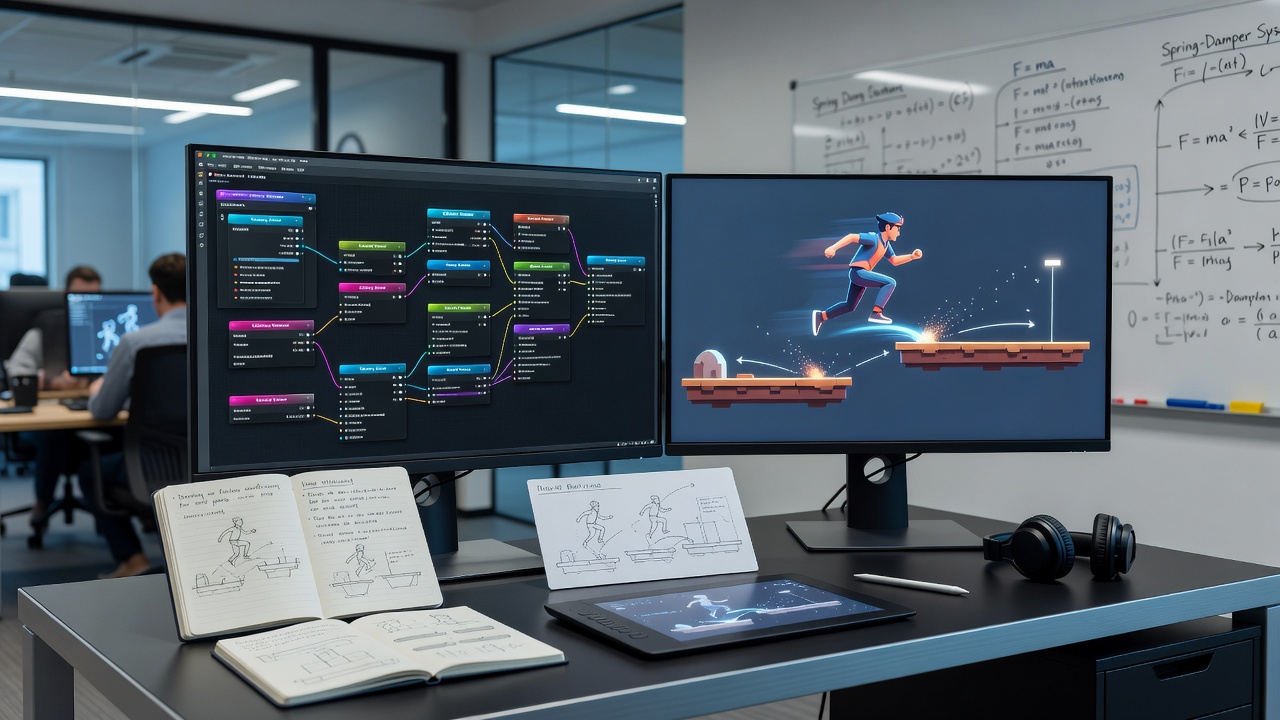
Contemporary Refinements Across Multiple Platforms
Current engines running on eighth and ninth generation hardware plus PC builds apply sub-stepping techniques that maintain consistent collision detection even when frame rates fluctuate, and this stability supports precision platforming in games such as Celeste where pixel-perfect jumps depend on unaltered velocity inheritance between frames. According to a study published by researchers at the University of Cambridge, these sub-step methods reduce simulation artifacts that previously disrupted combo chains in high-speed sequences.
Cross-platform releases now synchronize physics ticks between consoles and handhelds through deterministic floating-point modes, ensuring that movement mechanics remain identical whether played on Switch successors or high-end PCs as of June 2026. Those who've examined source ports observe that variable timestep handling still requires per-platform tuning to preserve intended feel when hardware clock speeds differ.
Impact on Franchise-Specific Mechanics
Series that span multiple eras demonstrate how physics updates directly reshape level design, because older momentum rules would break newer stages that assume refined air strafing or wall-cling friction. Take one developer team that rebuilt core systems for a long-running mascot platformer; they adjusted jump apex timing after engine upgrades altered gravity falloff curves, resulting in redesigned enemy placements that matched the new trajectories.
Indie titles built on Unity or Unreal have adopted similar layered approaches, combining rigid-body solvers with custom kinematic overrides that allow characters to override simulated forces during player input, and this hybrid method appears in many modern releases targeting multiple hardware generations simultaneously. Figures from the Interactive Software Federation of Europe reveal steady adoption rates of these hybrid techniques across platformer categories over the past decade.
Conclusion
Physics engine refinements have consistently altered movement possibilities in platformer franchises as hardware generations advanced, moving from hardcoded tables to full simulation layers that support emergent interactions. These evolutions continue to influence level architecture and input response patterns across ongoing releases, maintaining continuity while introducing new mechanical depth tied to each hardware cycle.