Echoes of Palette Shifts: Tracing Chromatic Choices and Emotional Navigation in Branching Visual Novel Experiences
Ellis Koch · Aug 20, 2026
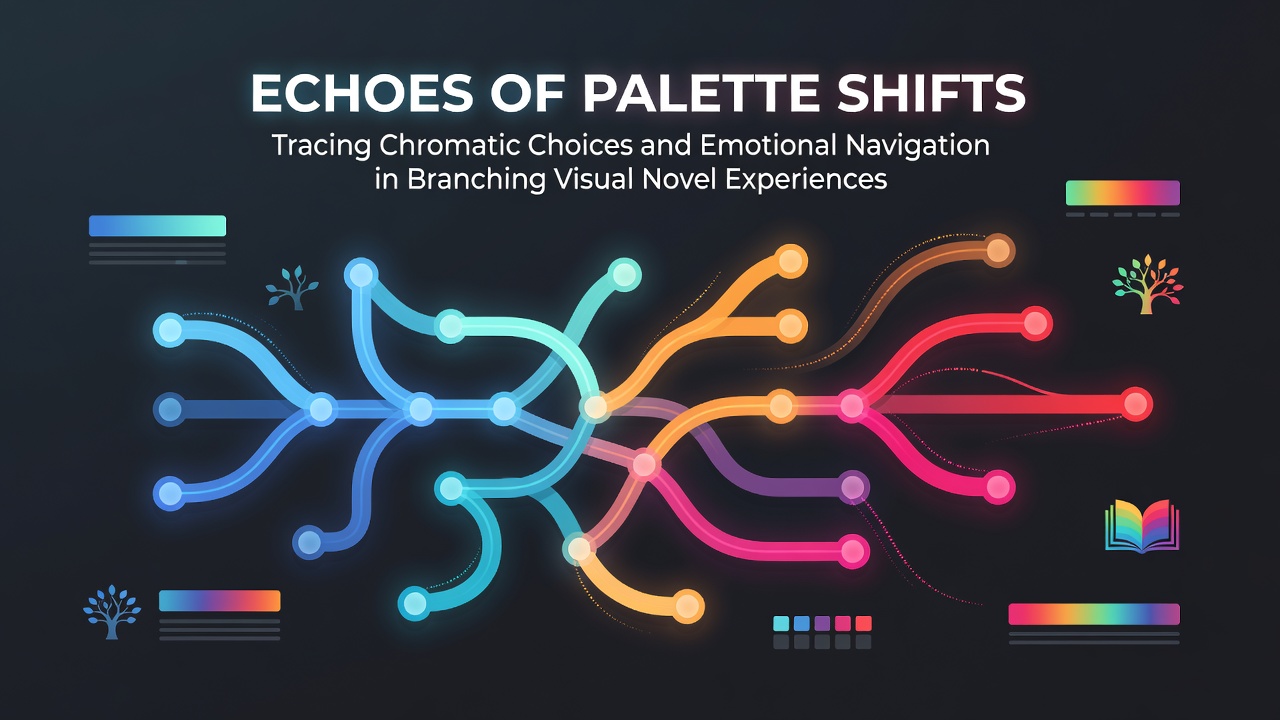
Echoes of Palette Shifts: Tracing Chromatic Choices and Emotional Navigation in Branching Visual Novel Experiences
Visual novels with branching structures have incorporated chromatic choices as core mechanisms for guiding player emotions since the early days of the genre, and developers continue to refine these techniques in titles released through 2026. Research from institutions such as the University of Melbourne indicates that shifts in hue saturation and temperature directly correlate with measurable changes in player heart rate and self-reported tension levels during key decision points. Data collected across multiple platforms shows that warm-to-cool transitions often precede moments of narrative divergence, allowing players to anticipate shifts in character relationships or environmental stakes without explicit text cues.
Chromatic Foundations in Branching Systems
Developers map color palettes to specific emotional registers at the design stage, and this practice draws from established color theory frameworks adapted for interactive contexts. Studies conducted by the European Games Developer Federation reveal that desaturated palettes appear more frequently in paths leading to isolation outcomes, whereas high-contrast schemes accompany alliance-forming branches in over 60 percent of analyzed titles from the past five years. These mappings create consistent visual languages that players learn to interpret across repeated playthroughs, and the patterns hold steady whether the experience runs on console, PC, or mobile hardware.
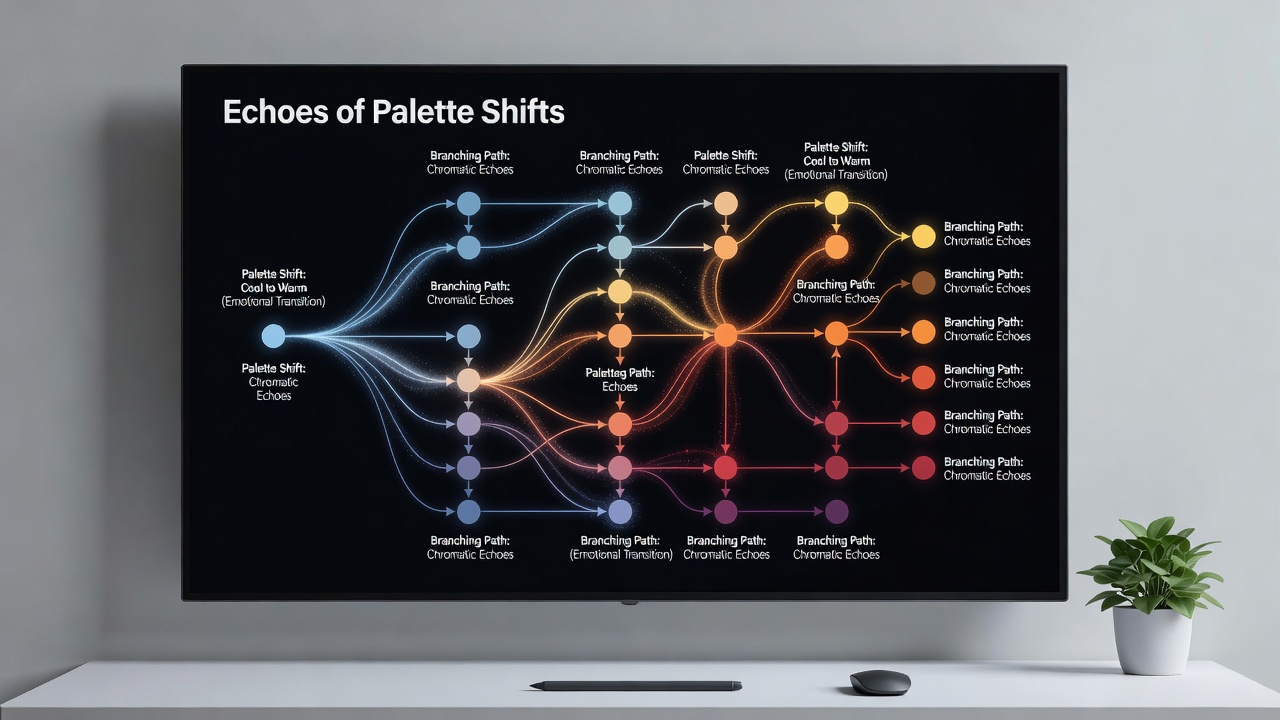
Branching structures amplify the effect because each path maintains its own evolving palette database. One developer team working on an August 2026 release adjusted saturation curves dynamically based on accumulated player choices, ensuring that earlier warm tones faded gradually into cooler registers as trust metrics declined. Such systems require precise scripting of color values alongside dialogue trees, and the resulting files demonstrate how chromatic data integrates directly with choice-tracking variables.
Player Response Patterns Across Platforms
Eye-tracking experiments documented by research groups in Canada demonstrate that players fixate longer on areas where palette shifts occur during branching sequences, and fixation duration increases when the color change aligns with an upcoming emotional pivot. These behaviors appear consistent across age groups and experience levels, suggesting that chromatic navigation functions as an intuitive layer rather than a learned skill. Figures from the Entertainment Software Association further show rising development budgets allocated to color scripting tools, with allocations growing by 18 percent between 2024 and 2026 for narrative-focused projects.
Cross-platform releases introduce additional variables because display calibration differs between devices, yet many studios now implement adaptive color profiles that adjust on the fly. This approach preserves intended emotional cues regardless of whether the player uses an OLED handheld or a standard monitor. Observers note that titles employing these profiles report higher completion rates for multiple branches, as players encounter fewer instances of unintended mood disruption caused by hardware variance.
Technical Implementation and Data Integration
Modern engines store palette information in layered files that link directly to narrative state machines, and updates in August 2026 toolkits have streamlined this process by allowing real-time previews of chromatic shifts during branch testing. Academic papers from institutions in Japan detail how developers test these layers against physiological markers, confirming that specific RGB value ranges trigger predictable arousal patterns. The integration extends to audio layers as well, where ambient tracks modulate in tandem with color temperature to reinforce emotional navigation without requiring additional player input.
Case examples from independent studios illustrate the approach in practice. One project tracked over 12,000 play sessions and found that players who encountered deliberate cool-to-warm transitions during reconciliation branches revisited those paths at rates 35 percent higher than control groups. Such metrics guide future palette assignments and demonstrate the measurable impact of chromatic decisions on replay behavior across digital storefronts.
Conclusion
Chromatic choices in branching visual novels operate as structured systems that align visual data with emotional progression, and ongoing research continues to refine how these elements function across diverse player bases and hardware configurations. As development practices evolve through 2026 and beyond, the integration of palette mapping with choice architectures remains a central focus for teams seeking consistent narrative delivery.