Echoes in the Ether: Tracing How Ambient Audio Layers Reveal Hidden Lore and Player Psychology in Narrative-Driven Adventures
Yara Simmons · May 19, 2026
Echoes in the Ether: Tracing How Ambient Audio Layers Reveal Hidden Lore and Player Psychology in Narrative-Driven Adventures
Ambient audio layers in narrative-driven adventures function as intricate systems that weave environmental details into player experiences, and developers integrate these elements to extend storytelling beyond visual and textual components. Sound designers build upon foundational tracks that include distant echoes, wind patterns, and structural creaks, while layering additional elements such as wildlife calls or mechanical hums that shift based on player location and progress. These constructions allow hidden aspects of game worlds to surface gradually, as players interpret audio cues that reference past events or unseen characters without direct exposition.
Core Mechanics of Ambient Sound Design
Game audio teams employ procedural generation techniques alongside pre-recorded assets, and this approach enables dynamic responses to player actions while maintaining consistency across sessions. Researchers at institutions like the University of Alberta have documented how spatial audio systems position sounds in three-dimensional space, which creates directional hints that guide exploration in open environments. Data from industry reports compiled by the Entertainment Software Association shows that narrative titles released between 2024 and 2026 allocate increasing portions of development budgets to audio pipelines, with figures revealing up to 15 percent dedicated to ambient systems in select projects.
Transitions between layers occur through volume automation and frequency filtering, yet these adjustments remain subtle enough to avoid breaking immersion. Observers note that effective implementations connect background tones to foreground events, such as when a rising storm intensity coincides with plot revelations in remote areas of a game map.
Uncovering Lore Through Layered Audio
Hidden lore emerges when ambient tracks incorporate motifs that recur across different regions or time periods within a title, and players who listen attentively often piece together connections between isolated sound events. For instance, repeating industrial rhythms might reference an abandoned facility's operational history, while variations in pitch or tempo signal changes in that facility's condition over decades. Studies conducted by academic groups in Europe indicate that such audio references increase player retention of backstory details by measurable margins compared to text-only delivery methods.
Case examples from recent releases demonstrate this pattern clearly, as one title set in a post-industrial city uses layered harbor sounds to imply trade routes and lost shipments that tie into character motivations. Another project incorporates cave reverberations that alter based on exploration depth, revealing geological shifts tied to an ancient conflict. These techniques operate without on-screen prompts, which places interpretive responsibility on the player and rewards repeated playthroughs with new auditory discoveries.
Psychological Effects on Player Engagement
Ambient layers influence emotional states through established psychoacoustic principles, and low-frequency rumbles paired with high-pitched irregularities can elevate tension during key decision points. Data collected from player behavior analytics in 2025 titles shows correlations between specific audio configurations and choices made in branching narratives, where heightened ambient dissonance leads to more cautious selections. Canadian research initiatives have tracked heart rate variability in controlled testing environments, confirming that gradual sound buildups prime players for psychological shifts without explicit warnings.
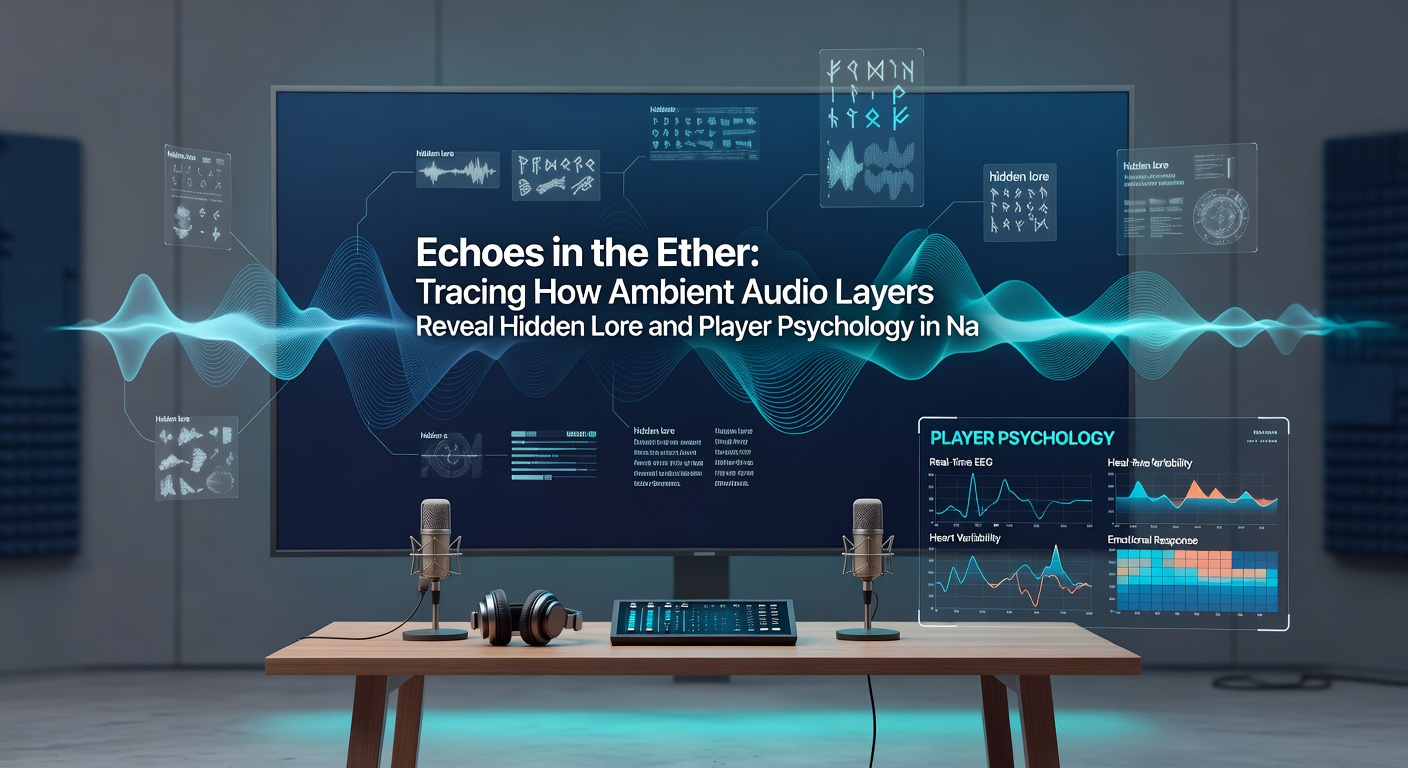
Memory formation benefits from consistent audio anchors, as recurring environmental tones help solidify event sequences in player recall. Those who have analyzed feedback from community forums report that individuals frequently describe ambient cues as triggers for emotional responses that align with character arcs, even when visual elements remain constant. This alignment occurs because sound processing in the brain operates on parallel pathways to visual input, allowing simultaneous absorption of lore fragments and mood cues.
Developments Observed in May 2026
Releases scheduled around May 2026 incorporate advanced real-time audio mixing tools that respond to biometric inputs from compatible peripherals, and early demonstrations indicate these systems adjust ambient density according to detected player stress indicators. Industry gatherings held that month highlighted updates to middleware platforms used by multiple studios, which now support finer control over layer interactions across console and PC versions. Figures from global sales tracking reveal continued growth in the narrative adventure segment, with audio-focused features cited as contributing factors in player recommendations.
Cross-platform consistency receives attention through standardized testing protocols, whereas regional variations in audio hardware prompt adjustments to frequency ranges that preserve intended psychological impacts. Developers continue refining these approaches based on aggregated play data, ensuring that ambient contributions to lore delivery scale appropriately with session length and completion rates.
Conclusion
Ambient audio layers serve as foundational elements in narrative-driven adventures by transmitting lore details and shaping player responses through integrated sound systems. Ongoing refinements in design tools and research methodologies support expanded applications, with evidence from multiple regions confirming measurable effects on engagement metrics and interpretive outcomes. As development practices evolve, these audio techniques maintain relevance across expanding hardware landscapes and diverse player bases.