Community Mods That Reshape Strategy Game Mechanics and Drive Long Term Evolution in Player Bases
Katja Keller · Aug 27, 2026
Community Mods That Reshape Strategy Game Mechanics and Drive Long Term Evolution in Player Bases
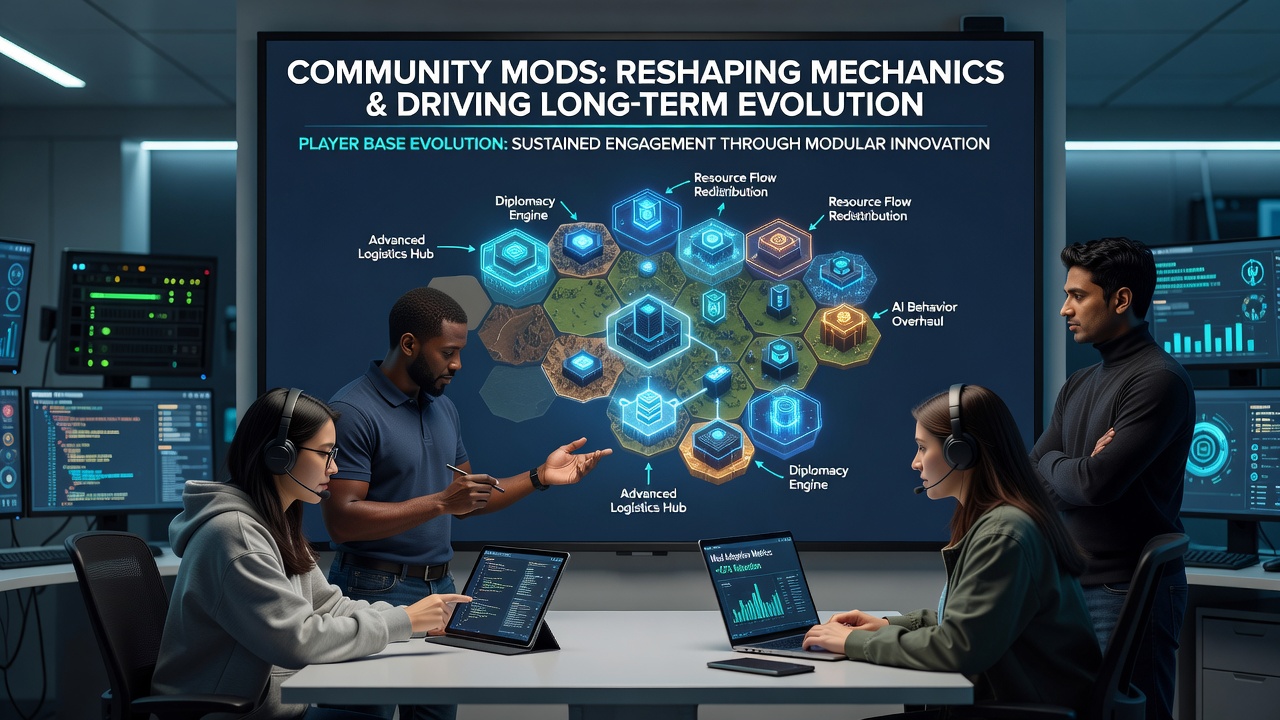
Community mods in strategy games introduce alterations to resource allocation systems, unit behaviors, and victory conditions while extending the lifespan of titles that might otherwise see declining engagement after official support ends, and data from industry reports shows sustained player activity in modded environments across multiple platforms. Researchers at institutions like the University of Tampere have documented how these modifications create new layers of complexity that shift player strategies from standard campaigns into customized scenarios with altered diplomatic interactions and economic models.
Mechanics Alterations Through Mod Integration
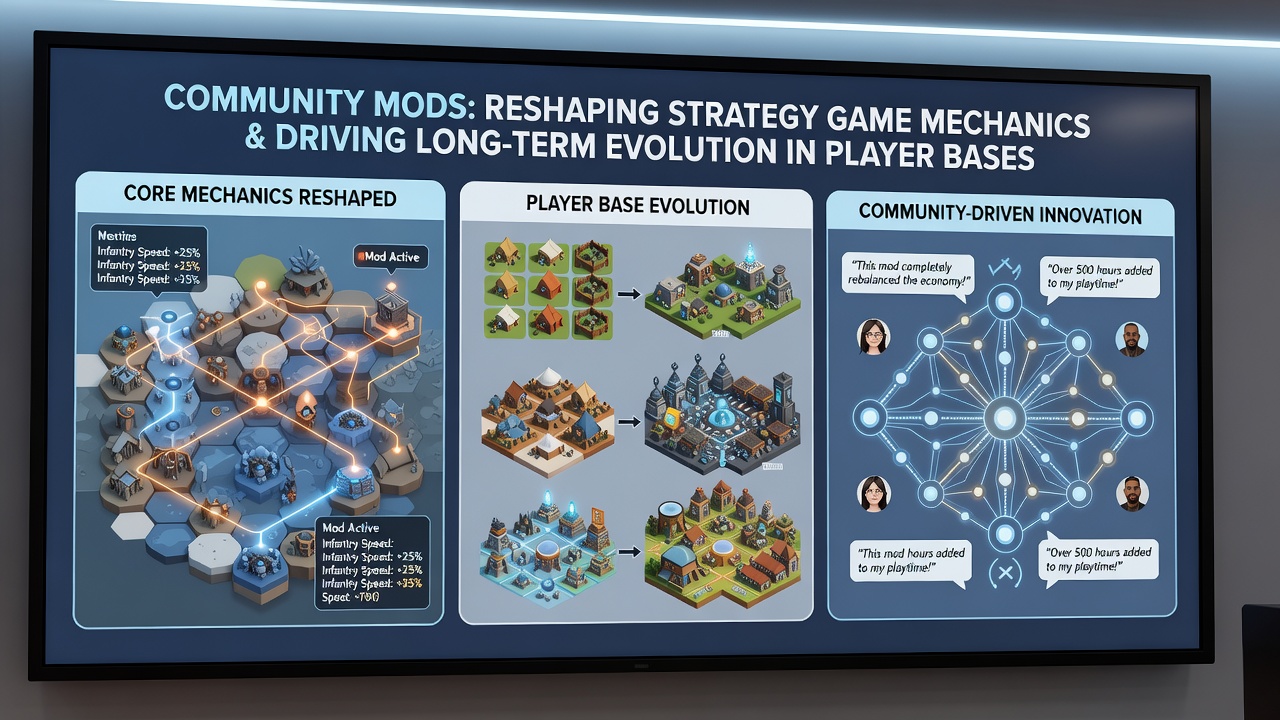
Mods frequently overhaul core loops by adding new faction abilities or rebalancing terrain effects, and observers note that in games such as Stellaris and Civilization VI these changes lead to emergent gameplay where alliances form differently because of custom event triggers or revised supply line calculations. According to figures from the Entertainment Software Association, strategy titles with active modding scenes maintain higher concurrent player counts long after launch, since participants adapt tactics around community-driven rulesets rather than official patches alone.
One study revealed that modifications targeting AI decision trees in turn-based systems encourage players to experiment with unconventional build orders, while those who study these patterns find that long-term bases evolve around shared repositories where files undergo iterative testing and feedback cycles. And the reality is that such adaptations often spread through dedicated forums and Discord servers, creating documentation that new users follow to install and tweak settings for compatibility across different hardware configurations.
Player Base Dynamics and Retention Patterns
Long-term evolution in player bases appears through the formation of specialized subgroups that focus on particular mod packs, and evidence suggests these groups develop their own metagames that incorporate elements absent from base games, such as randomized events or expanded research trees. Data indicates that communities centered around total conversion mods experience slower churn rates compared to unmodded versions, because participants invest time in creating custom maps and balancing adjustments that keep sessions fresh over months or years.
What's interesting here is how these mods drive cross-generational engagement, with veterans mentoring newcomers on installation procedures and strategy adjustments, while figures from the Interactive Games and Entertainment Association highlight increased participation in strategy genres within regions where mod support remains strong. As of August 2026, ongoing updates to popular frameworks continue to support older titles, allowing player bases to migrate mechanics innovations from one game to another through shared code libraries and collaborative projects.
Case Examples of Sustained Evolution
Take one researcher who noticed patterns in how mods for Total War series introduce new campaign rules that alter siege mechanics and army compositions, resulting in player groups that maintain active servers dedicated to testing these variants against each other in organized matches. There's this case where experts found that economic overhaul mods in grand strategy titles lead to revised trading networks, and those who've studied this know that participant bases grow through word-of-mouth sharing of successful configurations that reward careful planning over rushed expansion.
Observers note that these changes ripple outward when mod creators release tools for others to build upon existing frameworks, and research indicates that such ecosystems foster innovation because feedback loops between players and developers accelerate refinement of balance parameters. Yet the writing's on the wall that without community input, many strategy games would lose momentum faster, since official content releases alone do not always address niche preferences that mods fulfill directly.
Broader Impacts on Game Longevity
Mod communities contribute to extended relevance by preserving compatibility with modern operating systems and hardware, and experts have observed that titles supported in this way attract returning players who bring fresh perspectives shaped by experiences in other modded environments. Data shows that strategy game bases evolve through the accumulation of user-generated content that spans multiple years, creating archives of scenarios and rule variants that newcomers explore at their own pace while veterans refine advanced techniques.
Turns out these dynamics also influence how developers approach future projects, since patterns from successful mods inform design choices in sequels or expansions, and people often find that shared knowledge bases reduce barriers for entry into complex systems. The ball's in the court of these communities to sustain momentum through ongoing contributions that address emerging issues like performance optimizations or integration with new multiplayer features.
Conclusion
Community mods continue to reshape strategy game mechanics by introducing targeted changes that promote diverse playstyles and maintain active player bases over extended periods, with evidence from multiple sources confirming their role in long-term evolution. Researchers and industry analysts track these developments through participation metrics and content creation volumes, and the patterns established in current environments point toward further integration of user-driven innovations as technology advances. Those who've examined these ecosystems recognize the structured ways modifications spread and adapt, ensuring strategy titles remain relevant through collective effort rather than isolated updates.