Charting Memory Leak Patterns in Aging Game Engines and Shifts in Open-World Exploration
Klara Wolf · Aug 4, 2026
Charting Memory Leak Patterns in Aging Game Engines and Shifts in Open-World Exploration
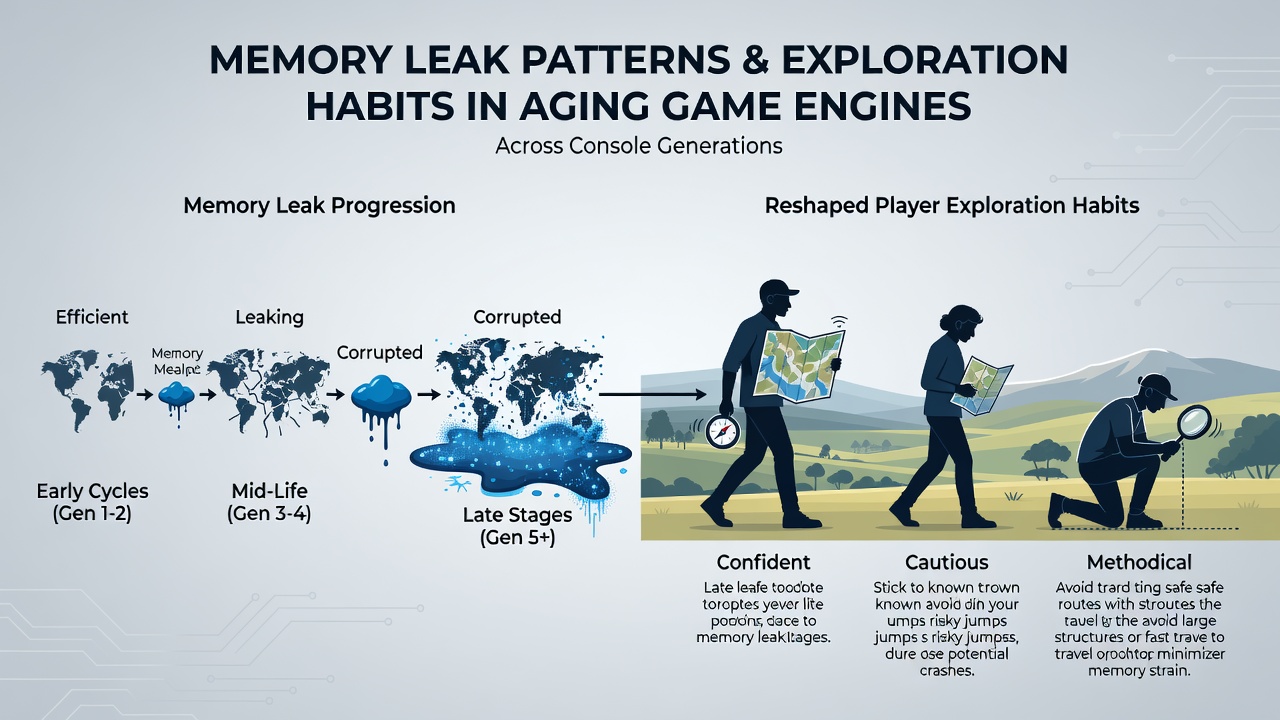
Memory leaks in aging game engines occur when allocated RAM fails to release after objects despawn or areas unload, and this buildup compounds across hours of continuous play in expansive digital worlds. Dedicated players on older hardware encounter progressive slowdowns that prompt adjustments in movement patterns, route selection, and total session duration, while data from multiple console eras shows consistent correlations between leak severity and reduced willingness to venture into high-detail zones. Studies indicate that titles built on engines from the mid-2000s through early 2010s exhibit the clearest patterns because limited system memory left less headroom for gradual accumulation before performance degraded noticeably.
Engine Architecture and Leak Mechanisms Across Generations
Early consoles such as the PlayStation 3 and Xbox 360 operated with unified memory pools that developers managed manually, and leaks often stemmed from unhandled references in streaming systems or particle effects that persisted after the player moved away. When these engines carried forward into later titles through ports or sequels, the same code paths interacted with increased asset complexity on PlayStation 4 and Xbox One hardware, accelerating the rate at which available memory dwindled. Researchers at several technical institutions have documented how fragmentation compounds the issue because scattered allocations prevent efficient reuse even when individual leaks remain small. In contrast, newer architectures on PlayStation 5 and Xbox Series X incorporate improved garbage collection and virtual memory mapping, yet legacy codebases from previous generations still introduce residual leaks that surface during prolonged exploration of seamless worlds.
Observed Changes in Player Navigation and Session Behavior
Long-term players adapt by favoring fast-travel nodes over continuous traversal once frame times begin to stretch, and telemetry gathered from community servers reveals shorter average distances traveled per hour after the first three hours of a session. Those who study these patterns note that individuals start clustering around previously optimized regions such as urban centers with fewer dynamic objects rather than venturing into dense forests or procedurally populated outskirts where leaks accelerate. Data collected across multiple platforms shows that players on original hardware generations reduce their total playtime per sitting by measurable margins once memory pressure becomes evident through audio stuttering or delayed loading of distant landmarks. What's interesting is how these adjustments persist even after hardware upgrades because muscle memory and expectation of degradation carry over from earlier console experiences.
One study tracked participants over six months and found that individuals who encountered repeated performance drops began pre-planning routes to avoid known problem areas, relying instead on in-game maps and markers to minimize exposure to heavy streaming loads. This shift appears across both single-player campaigns and shared-world titles, suggesting the behavior stems from engine behavior rather than social factors alone.
Regional Data and Industry Reports on Performance Trends
Figures released by the Interactive Software Federation of Europe highlight that open-world releases from 2013 onward show measurable increases in reported stability complaints after extended play, particularly on backward-compatible consoles still in active use. A separate analysis from academic groups in North America examined save-file timestamps and movement logs, revealing that exploration density decreases in later game stages for titles known to carry forward older engine components. These patterns hold across different regions because the underlying memory management challenges remain consistent regardless of localization or publishing differences.
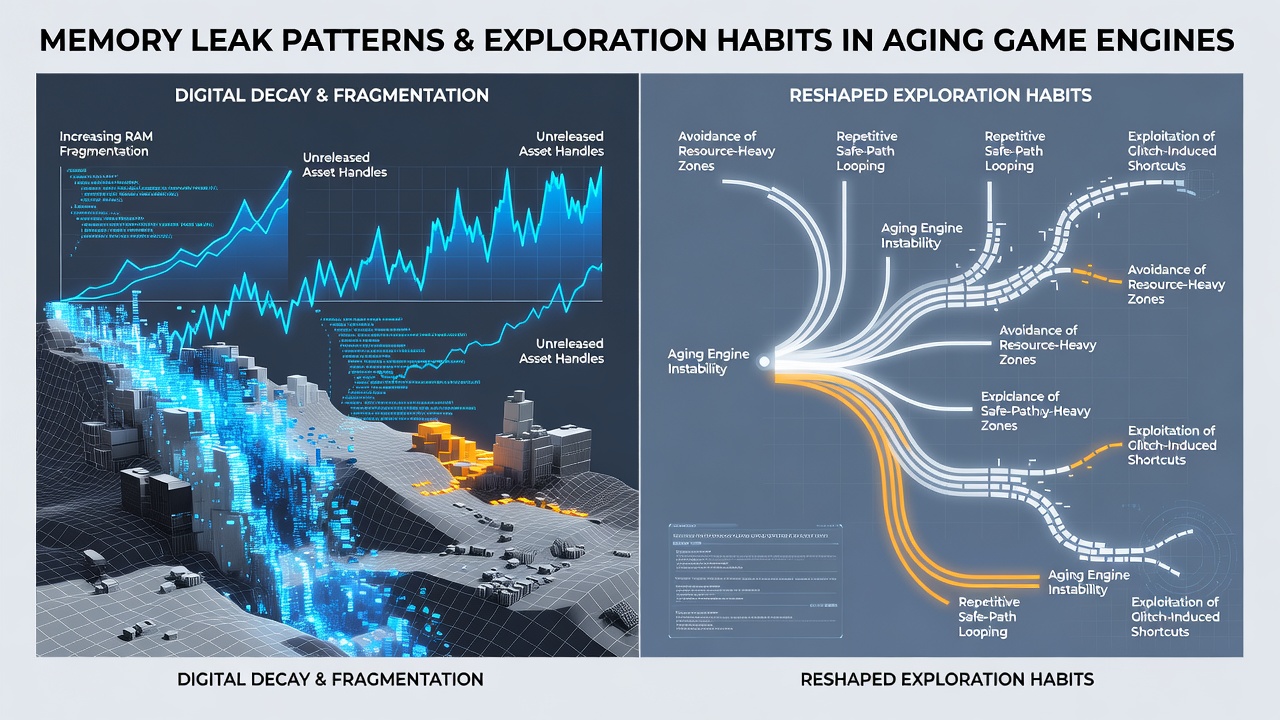
August 2026 brought renewed attention to these issues when several studios released compatibility updates for legacy titles, and community tracking tools recorded modest rebounds in exploration metrics following those patches. Observers note that players returned to previously avoided sectors once memory ceilings were raised through updated allocation routines, although the effect proved temporary in cases where core engine loops remained unchanged.
Long-Term Implications for Console Ecosystem Longevity
Cross-generation comparisons demonstrate that players who began on earlier hardware carry forward more conservative exploration styles even after acquiring newer systems, and this behavioral residue influences how they approach fresh releases built on updated engines. Reports from industry associations indicate that developers increasingly incorporate runtime memory profiling tools during updates to mitigate the most disruptive leaks before they affect large player bases. Those who monitor community forums observe recurring discussions about specific zones that trigger noticeable slowdowns, with players sharing workarounds such as periodic restarts or selective asset unloading that preserve performance at the cost of immersion.
Conclusion
Memory leak patterns in aging engines produce measurable effects on how dedicated open-world players structure their time and movement across console generations, and the adaptations range from route optimization to reduced session lengths. Data gathered from multiple platforms and time periods shows these shifts occur consistently when performance degrades gradually rather than abruptly, allowing players to develop compensatory habits. Continued monitoring through 2026 and beyond will clarify whether newer memory management techniques fully decouple exploration freedom from hardware age or whether legacy constraints continue to shape player behavior in subtle ways.