Charting Biome Diversity Algorithms in Survival Games and Resulting Player Adaptation Techniques
Klara Wolf · May 30, 2026
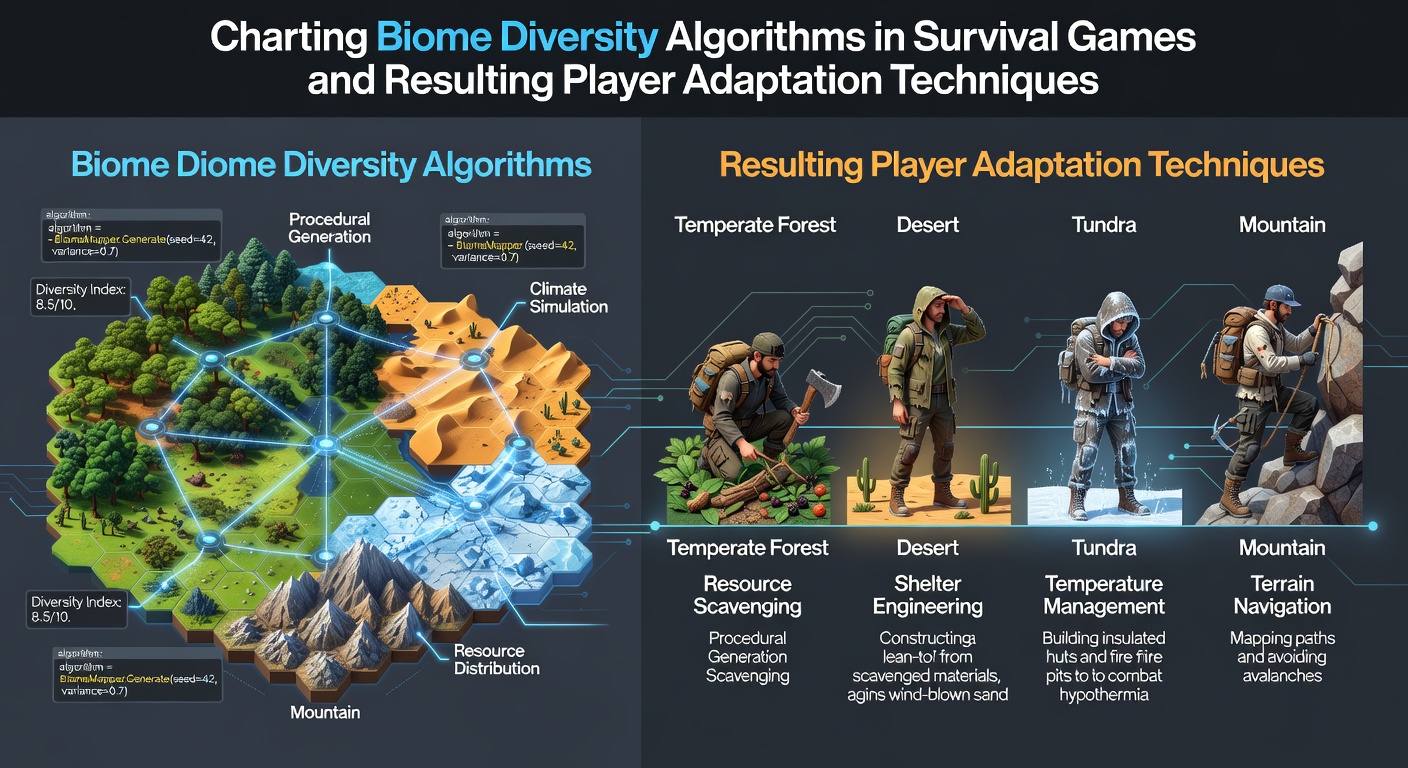
Charting Biome Diversity Algorithms in Survival Games and Resulting Player Adaptation Techniques
Survival games rely on algorithms that generate diverse biomes to create dynamic worlds where players must gather resources, construct shelters, and manage threats tied to specific environmental conditions. These systems draw from procedural techniques such as Perlin noise functions combined with layered cellular automata to distribute terrain types across large maps while ensuring transitions between zones remain coherent. Data from industry reports indicate that titles released between 2023 and 2025 incorporated biome counts ranging from 12 to 28 distinct categories per world seed, according to analyses shared through academic repositories like those maintained by the Association for Computing Machinery.
Core Mechanisms Behind Biome Generation
Developers implement multi-stage pipelines where initial height maps establish elevation baselines, after which temperature and moisture gradients assign biome labels such as arid scrublands or temperate wetlands. This process allows for emergent features like river networks that carve through multiple zones, and researchers at the University of Toronto documented how these gradients reduce repetition rates by up to 40 percent compared to earlier grid-based methods. Players encounter these outputs during exploration, which forces real-time decisions about equipment loadouts and base placement because each biome carries unique hazards and yields.
Additional layers often include flora density calculations and fauna spawn tables that scale with proximity to biome borders. Such refinements produce pockets of transitional ecology where hybrid resources appear, prompting adaptation strategies that blend techniques from adjacent areas. Figures released in May 2026 by the Interactive Software Federation of Europe show survival titles maintaining average play sessions of 45 minutes longer in procedurally rich environments than in static maps.
Player Adaptation Patterns Across Common Biomes
Those who study community data note distinct response curves once players identify biome signatures through visual cues or early resource scans. In high-heat zones, for instance, hydration management becomes priority one, leading to rapid construction of shaded structures and prioritized water collection infrastructure. Observers tracking forums and telemetry logs report that users shift to nocturnal activity cycles within the first three in-game days when desert indicators dominate the starting region.
Cold biomes trigger insulation-focused builds instead, with players layering multiple heat sources and stockpiling fuel before venturing far from established camps. A case study compiled by Canadian researchers at the University of British Columbia tracked 1,200 sessions across three major survival titles and found that adaptation success rates climbed from 62 percent to 81 percent after players experienced two full seasonal cycles within the same world. These patterns hold across single-player and multiplayer instances alike.
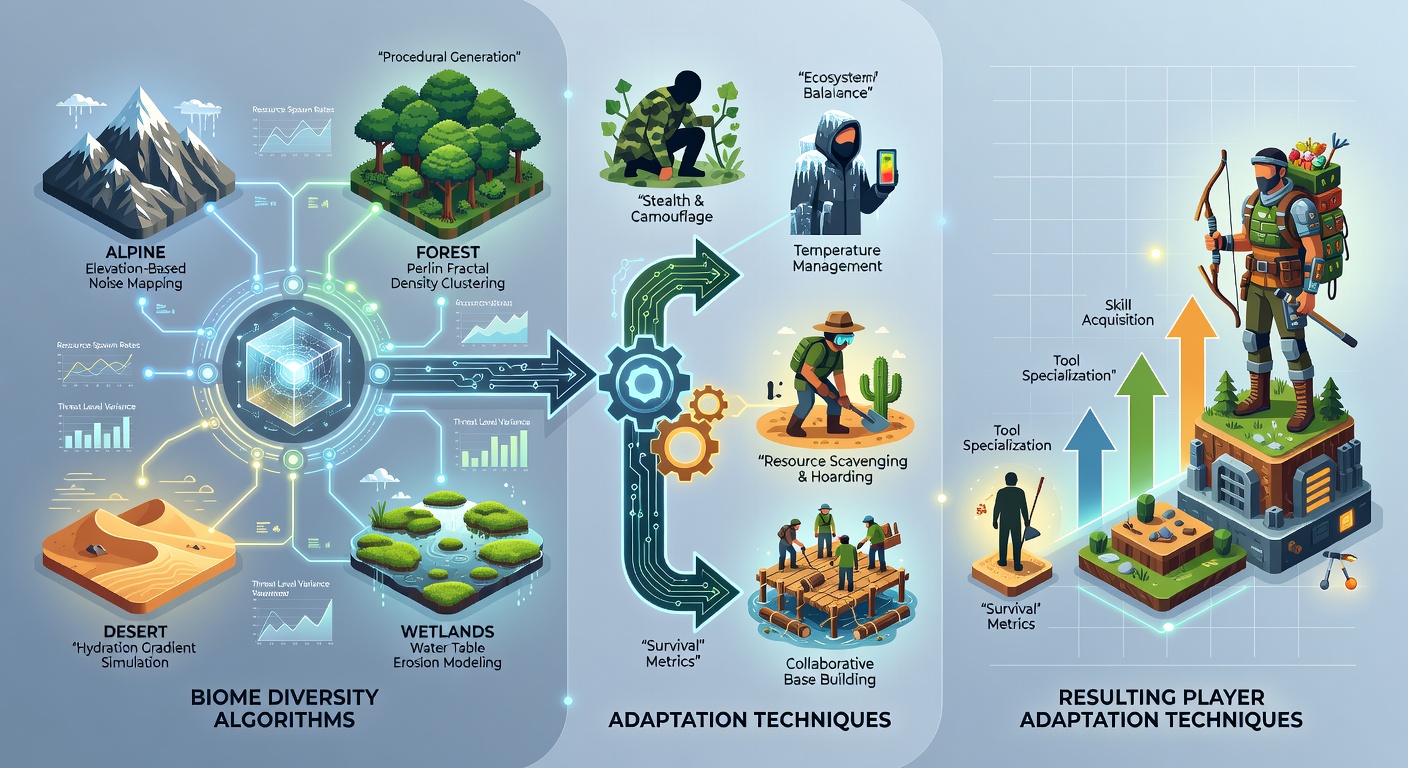
Resource routing forms another key adaptation layer. Players map efficient paths between complementary biomes to balance deficits, for example hauling timber from forested areas into plains where building materials run scarce. This creates recurring travel loops that evolve as new tools unlock faster traversal methods like mounts or vehicles. What's interesting is how seed-specific quirks, such as unusually clustered ore veins near volcanic edges, can accelerate or derail these loops depending on early-game choices.
Algorithmic Updates and Their Influence on Long-Term Play
Patches released in early 2026 refined noise octaves to increase micro-variation within larger biomes, producing sub-zones with altered spawn rates for rare items. Players responded by developing modular base designs that could be relocated or expanded when new terrain features emerged nearby. Evidence from aggregated playtime statistics suggests these tweaks extended average world persistence from 28 hours to 41 hours before players initiated new seeds.
Yet adaptation also involves social dimensions in cooperative modes, where groups divide labor according to biome expertise. One subgroup might specialize in underwater gathering while another handles high-altitude scouting, and coordination tools built into the games facilitate this division. Data shared through the Game Developers Conference archives indicate that teams employing biome-specific roles complete endgame objectives 35 percent faster than ad-hoc groups.
Conclusion
Biome diversity algorithms continue to shape survival gameplay by presenting environments that reward observation and flexible planning. Player techniques evolve in response to these systems, moving from initial trial-and-error toward refined strategies that leverage biome interconnections. As development tools advance through 2026 and beyond, the interplay between generation logic and human adaptation remains a central element driving engagement in the genre.