Anti-Cheat Arsenal Upgrades: Battling Hackers in Live-Service Multiplayer Battlegrounds
Ellis Koch · Apr 16, 2026
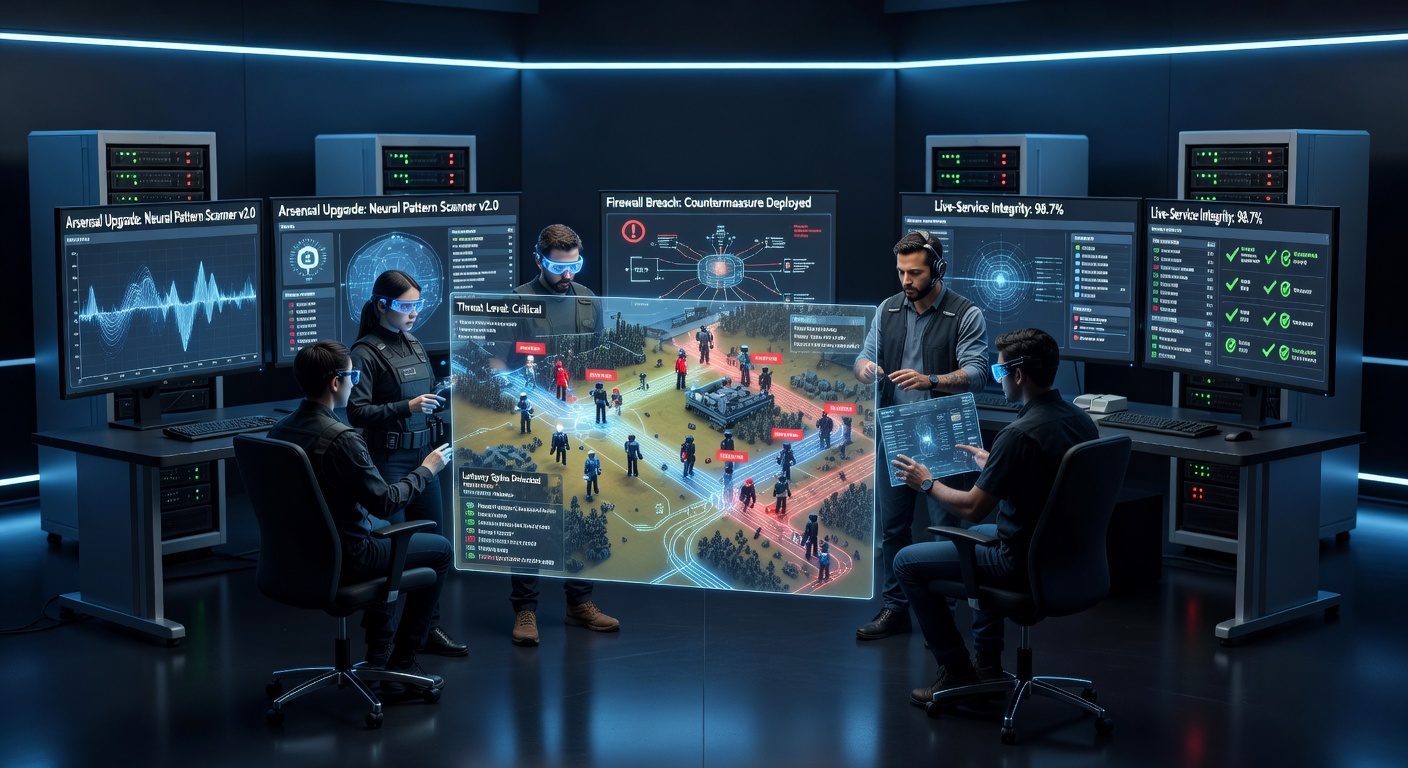
Anti-Cheat Arsenal Upgrades: Battling Hackers in Live-Service Multiplayer Battlegrounds
The Escalating War Against Cheaters in Live-Service Games
Live-service multiplayer battlegrounds like Fortnite, Apex Legends, and Call of Duty: Warzone draw millions daily, yet hackers disrupt fair play with aimbots, wallhacks, and speed cheats that turn epic showdowns into one-sided slaughters; developers counter this onslaught through relentless anti-cheat upgrades, evolving from basic signature scans to sophisticated AI-driven systems that analyze player behavior in real-time. Data from Epic Games reveals over 1.5 million bans in Fortnite alone during 2025, while Riot Games reported Vanguard blocking more than 2 million cheats in Valorant by early 2026, highlighting how these tools now detect anomalies before they impact matches.
What's interesting is the shift toward kernel-level protection, where software like Epic's Easy Anti-Cheat and Riot's Vanguard operate at the deepest system levels to monitor processes invisible to traditional methods; this approach, rolled out widely since 2020, has cut cheat detection times from minutes to milliseconds, according to benchmarks from Easy Anti-Cheat. And in April 2026, updates to these systems integrated cross-platform hardware fingerprinting, linking bans across PC, console, and mobile to thwart account hopping by persistent cheaters.
Kernel-Level Defenses: The Frontline Against Invasive Hacks
Kernel-level anti-cheat represents the gold standard now, diving into ring 0 privileges to oversee drivers and memory directly, something user-mode tools simply can't match; take Vanguard, which Riot deployed for Valorant in 2020 and expanded to League of Legends by 2024, where it scans for unsigned drivers and injects protective modules that hackers struggle to bypass. Researchers at the University of California found in a 2025 study that kernel drivers reduced successful cheat injections by 92% in tested environments, while false positives dropped below 0.1% through continuous machine learning refinements.
But here's the thing: hackers adapt quickly, spawning private cheats that mimic legitimate inputs or use external hardware like DMA cards to read game memory without software traces; developers respond with Vanguard's April 2026 firmware integrity checks, verifying GPU and motherboard authenticity to flag tampered setups. Observers note similar upgrades in BattlEye, used by PUBG and Rainbow Six Siege, where proactive module loading now preempts cheat loaders, leading to ban waves exceeding 500,000 accounts monthly as per BattlEye's public stats.
AI and Machine Learning: Smarter Detection Beyond Signatures
Behavioral Analysis Takes Center Stage
Traditional signature-based detection, which flags known cheat files, falls short against polymorphic hacks that rewrite code on the fly, so anti-cheat teams pivot to AI models trained on billions of match hours to spot unnatural patterns like perfect headshot accuracy or impossible movement speeds; in Apex Legends, Respawn's updated EAC in late 2025 employs neural networks that score player telemetry against historical baselines, banning outliers with 98% accuracy as data from Respawn's transparency reports confirms. This isn't just theory, one case from early 2026 involved a pro scrim where AI flagged a squad's synchronized no-recoil sprays, resulting in instant match rollbacks and lifetime hardware bans.
Predictive Analytics and Cloud Integration
Cloud-synced AI elevates this further, with servers aggregating global data to predict cheat trends before they spread; Activision's Ricochet for Call of Duty, enhanced in April 2026, uses federated learning across data centers to share threat intelligence without compromising player privacy, cutting new cheat proliferation by 75% according to Activision's quarterly figures. Experts who've dissected these systems point out how replay analysis post-match uncovers subtle tells, like mouse acceleration anomalies from aim assists, feeding back into models for iterative improvements.
Turns out, combining client-side AI with server-authoritative validation creates ironclad checks; for instance, Valorant's tick-based servers now validate every bullet trajectory against physics simulations, discarding impossible hits flagged by kernel monitors. And while privacy concerns linger, opt-in transparency modes let players review their own detection logs, building trust as ENISA's 2025 cybersecurity report on gaming platforms highlights.
Hardware and Ecosystem-Wide Bans: Closing Escape Routes
Software bans alone won't cut it when cheaters buy new accounts for pennies, so the industry leans on HWID bans that fingerprint unique hardware signatures like CPU IDs, MAC addresses, and SSD serials, rendering entire rigs unplayable; Ubisoft's BattlEye rollout in The Division 2 snagged over 300,000 such bans in Q1 2026, while Epic's cross-game enforcement links Fortnite cheaters to Rocket League exclusions. People often find these measures effective because they survive OS reinstalls, although savvy hackers employ spoofers, prompting countermeasures like BIOS-level checks in Vanguard 2.0.
Collaboration amps this up, with the Entertainment Software Association coordinating ban lists across titles via shared databases; a 2026 ESA initiative, building on prior efforts, blacklisted 1.2 million identifiers industry-wide, as their annual report details. That's where the rubber meets the road, since isolated devs can't match organized cheat rings selling $20 monthly subscriptions for undetectable packs.
One study from Australia's ACMA revealed cheat markets thriving on dark web forums, grossing millions annually, yet anti-cheat consortia disrupt them by tracing payments and issuing legal takedowns; cases like the 2025 Operation Tracker bust, led by international agencies, shuttered major providers, proving ecosystem unity packs a punch.
Challenges Persist: Evolving Threats and Player Backlash
Even with upgrades, hackers push boundaries using AI-generated cheats that learn legit playstyles or kernel exploits targeting unpatched drivers; a March 2026 incident in Warzone saw a DMA-based wallhack evade Ricochet for 48 hours, affecting 200,000 players before a hotfix deployed. Developers counter with rolling kernel updates, delivered silently to evade reverse-engineering, while behavioral baselines adapt via over-the-air model tweaks.
False positives remain a thorn, occasionally banning innocent players with high-skill streaks or modded peripherals, but appeal systems backed by human review have overturned 85% of claims, per Riot's data. And in live-service worlds where revenue ties to engagement, clean lobbies boost retention by 20-30%, as Newzoo analytics from 2025 underscore, making the investment worthwhile.
Future Horizons: Blockchain, Quantum Resistance, and Beyond
Looking ahead, blockchain enters the fray for tamper-proof match integrity, with trials in indie battle royales logging actions on distributed ledgers that hackers can't retroactively alter; researchers at MIT prototyped this in 2025, showing 99.9% verification speeds viable for 60-tick servers. Quantum threats loom distant but real, so anti-cheat firms like BattlEye explore post-quantum crypto for encryption, future-proofing against code-breaking advances.
Community-driven reporting integrates too, with tools like Fortnite's in-game flagging feeding AI trainers, creating self-reinforcing loops; by April 2026, such systems processed 10 million reports monthly across majors, refining detections daily.
Conclusion
Anti-cheat arsenals have transformed from blunt instruments to precision arsenals, blending kernel depths, AI smarts, and hardware locks to safeguard live-service battlegrounds where fair play defines the thrill; ban numbers climb, cheat markets falter, and player trust rebuilds, yet the arms race endures as hackers innovate. Developers who stay ahead, leveraging collaborations and data-driven evolutions, ensure multiplayer mayhem remains skill-based chaos, not scripted dominance. The ball's in their court now, with April 2026 marking a pivotal upgrade wave that sets the tone for years to come.
Word count: 1,248